

UNLOCK CAPITALS
Securing the future of wild tigers requires more than field action; it demands political will, financial innovation and strong civil society partnerships. In 2025, collaboration reached a new milestone with the formal establishment of the Tiger Conservation Coalition Secretariat, creating a unified platform to drive global advocacy and resource mobilisation for this species. This strengthened coalition is already shaping ambitious initiatives, from involvement in the Tiger Landscapes Investment Facility, aiming to mobilise US$ 200 million for nature-positive investments, to piloting Tiger Impact Certificates, an innovative biodiversity credit model linking conservation success, community well-being, and private sector investment.
SUSTAINBLE FINANCING


In April 2024, under the patronage of Her Majesty The Queen of Bhutan the first Sustainable Finance for Tiger Landscapes Conference united governments, the private sector and civil society to tackle the funding gap in tiger conservation and inspire bold new investments. The event concluded with the Paro Statement, from the Royal Government of Bhutan and the Tiger Conservation Coalition, calling for a global effort to mobilise US$ 1 billion in additional financing for tiger landscapes by 2034.
WWF Tigers Alive, as a member of the Tiger Conservation Coalition, has initiated the development of several sustainable financing opportunities for the conservation of tiger landscapes in support of this US$ 1 billion ambition.


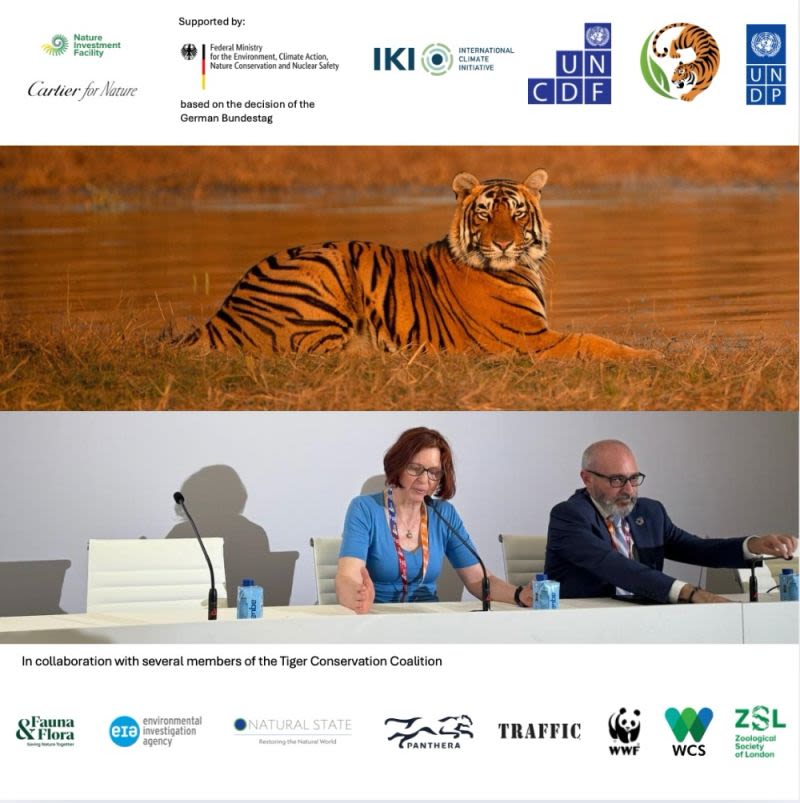
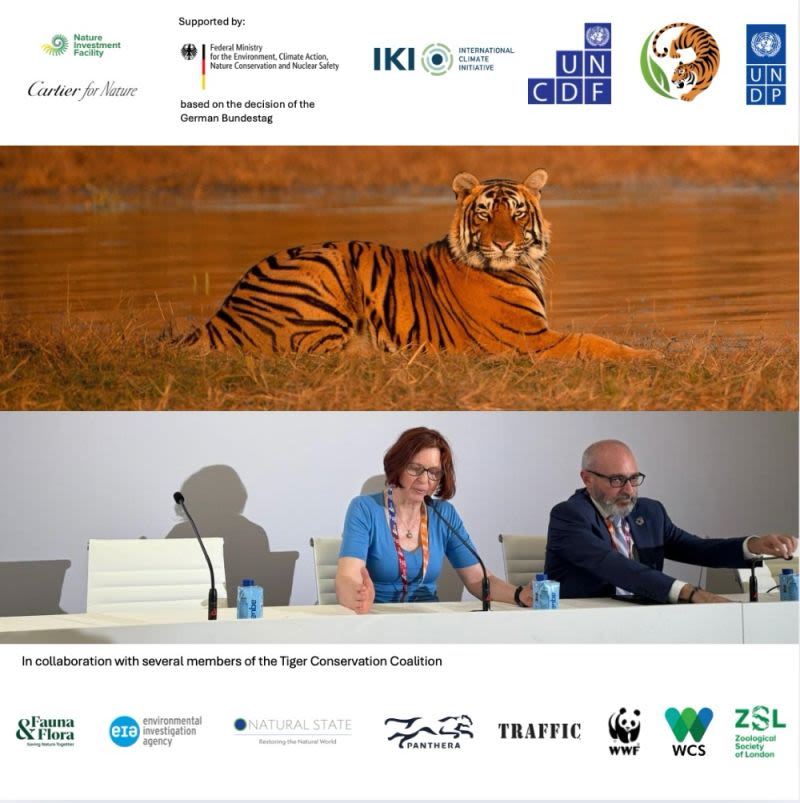
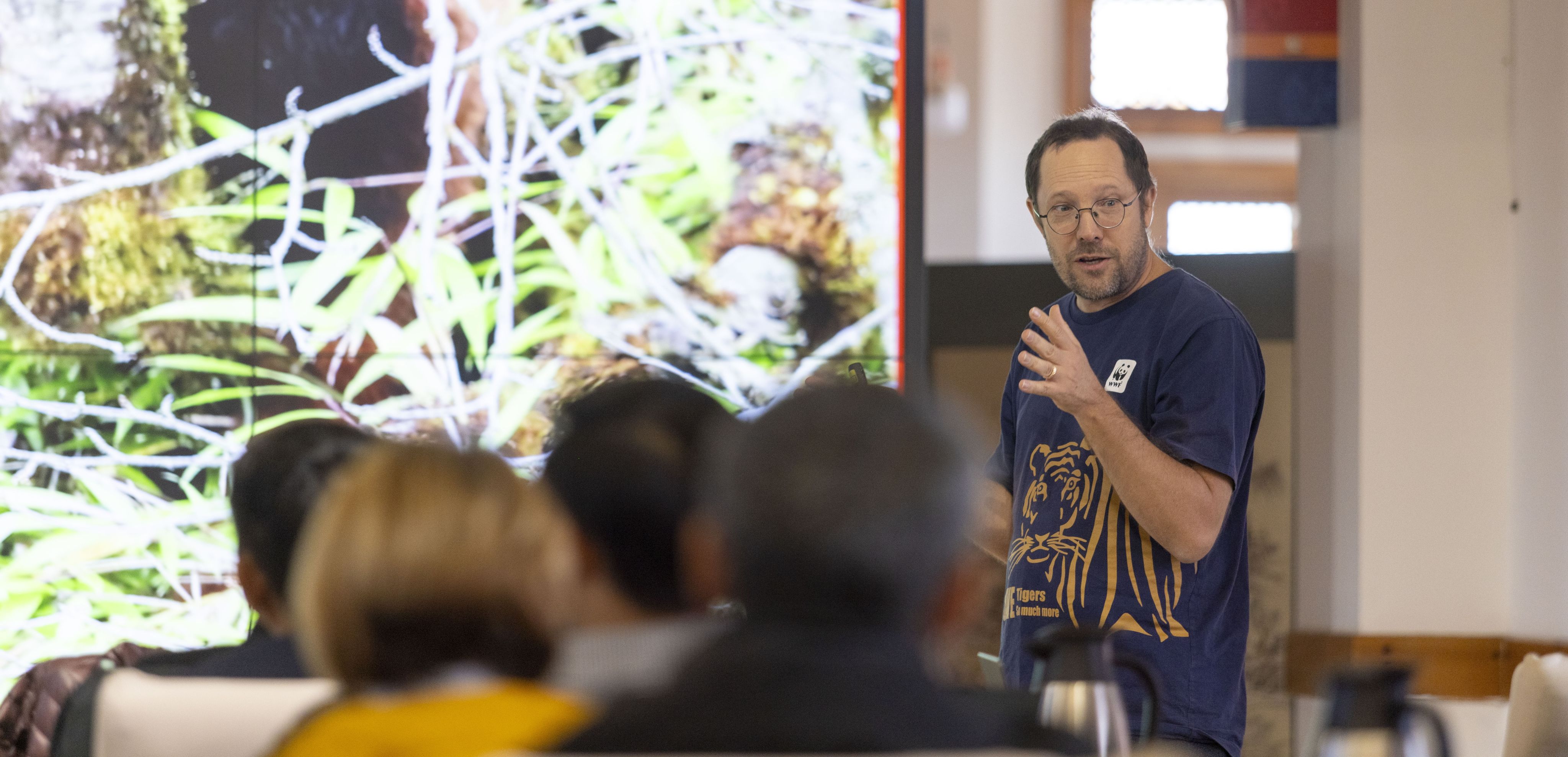
In July 2025, the Tiger Conservation Coalition gathered at Library of the Zoological Society of London to align expertise across science, coexistence, sustainable finance and communications. Partners finalised a shared collaboration framework, drafted an impact model to guide collective action, and advanced strategic and coordinated approaches for the private and public sector partners with the best interest and opportunity to contribute to an additional US$1 billion for tiger conservation.© Mike Belecky / WWF
In July 2025, the Tiger Conservation Coalition gathered at Library of the Zoological Society of London to align expertise across science, coexistence, sustainable finance and communications. Partners finalised a shared collaboration framework, drafted an impact model to guide collective action, and advanced strategic and coordinated approaches for the private and public sector partners with the best interest and opportunity to contribute to an additional US$1 billion for tiger conservation.© Mike Belecky / WWF
Tiger Landscapes Investment Facility


The Tiger Landscapes Investment Facility was launched on June 30th, 2025, at the 4th International Conference on Financing for Development in Seville. With initial EUR 13 million investment from the German Federal Ministry for the Environment this fund aims to mobilise US$ 200 million in nature (and tiger) positive investments in tiger landscapes. Led by United Nations Development Programme (UNDP), and in collaboration with the UN Capital Development Fund (UNCDF) and the Tiger Conservation Coalition, this Facility will incubate and finance businesses and initiatives that benefit nature and people in tiger-range countries. Tigers Alive have supported its development in recent years; particularly the impact monitoring design, the environmental and social safeguards framework, the branding, and communications. The Facility will be operationalised in 2026 in Thailand and Malaysia and is seeking additional resources to expand to several other tiger-range countries.

Tiger Landscapes Investment Facility
The Tiger Landscapes Investment Facility was launched on June 30th, 2025, at the 4th International Conference on Financing for Development in Seville. With initial EUR 13 million investment from the German Federal Ministry for the Environment this fund aims to mobilise US$ 200 million in nature (and tiger) positive investments in tiger landscapes. Led by United Nations Development Programme (UNDP), and in collaboration with the UN Capital Development Fund (UNCDF) and the Tiger Conservation Coalition, this Facility will incubate and finance businesses and initiatives that benefit nature and people in tiger-range countries. Tigers Alive have supported its development in recent years; particularly the impact monitoring design, the environmental and social safeguards framework, the branding, and communications. The Facility will be operationalised in 2026 in Thailand and Malaysia and is seeking additional resources to expand to several other tiger-range countries.
FEATURE STORY: Unlocking Finance with Tiger Impact Certificates
Conservation finance is at a pivotal moment. While global attention on the biodiversity crisis is growing, there remains a significant gap between ambition and the sustainable funding needed to deliver durable outcomes on the ground. Bridging this gap requires bespoke, realistic financing mechanisms that reflect ecological complexity, social realities and long-term conservation needs. Tiger Impact Certificates respond to this challenge by using tigers (an apex predator and powerful ecosystem indicator) as a lens for measuring landscape health, helping translate the recovery of complex ecosystems into credible, investable impact.
Aligned with emerging global guidelines and guardrails for biodiversity credits, Tiger Impact Certificates are being designed by WWF Tigers Alive, with partners from the Tiger Conservation Coalition, to incentivise credible place-based conservation impact. They offer corporate and philanthropic leaders an opportunity to pioneer nature-based investments that directly support tiger recovery, climate benefits and strengthened community well-being.
“It is uncertain if nature markets will scale and become a viable biodiversity funding mechanism. But if they do WWF and tigers will be at the centre of this innovation. The Tiger Impact Certificate pilots currently represent the only Asian species focused biodiversity crediting approach and we’re trying to demonstrate what ‘good’ can look like; transparent, place-based, and focused on outcomes that truly matter.”


Tiger Impact Certificates will be grounded in simplicity and robust science-based indicators. A defining feature of Tiger Impact Certificates is the inclusion of community well-being as a core indicator of impact. For large carnivores like tigers, conservation success is inseparable from the lives and livelihoods of the people who share these landscapes. The indicators will track real outcomes such as progress for wild tiger populations, the protection and restoration of habitat, and improved resilience of tiger landscapes. By tying investment directly to measurable results, the approach aims to build confidence among investors while maintaining conservation credibility.
To test this model, Tiger Impact Certificates are currently being piloted, using financing from the Global Tiger Innovation Fund (see below), in two sites – Nubi Gewog in Bhutan and Salak Phra Wildlife Sanctuary in Thailand. These sites reflect a range of ecological and governance contexts and are united by strong, long-standing partnerships with Tiger Conservation Coalition members and local communities.

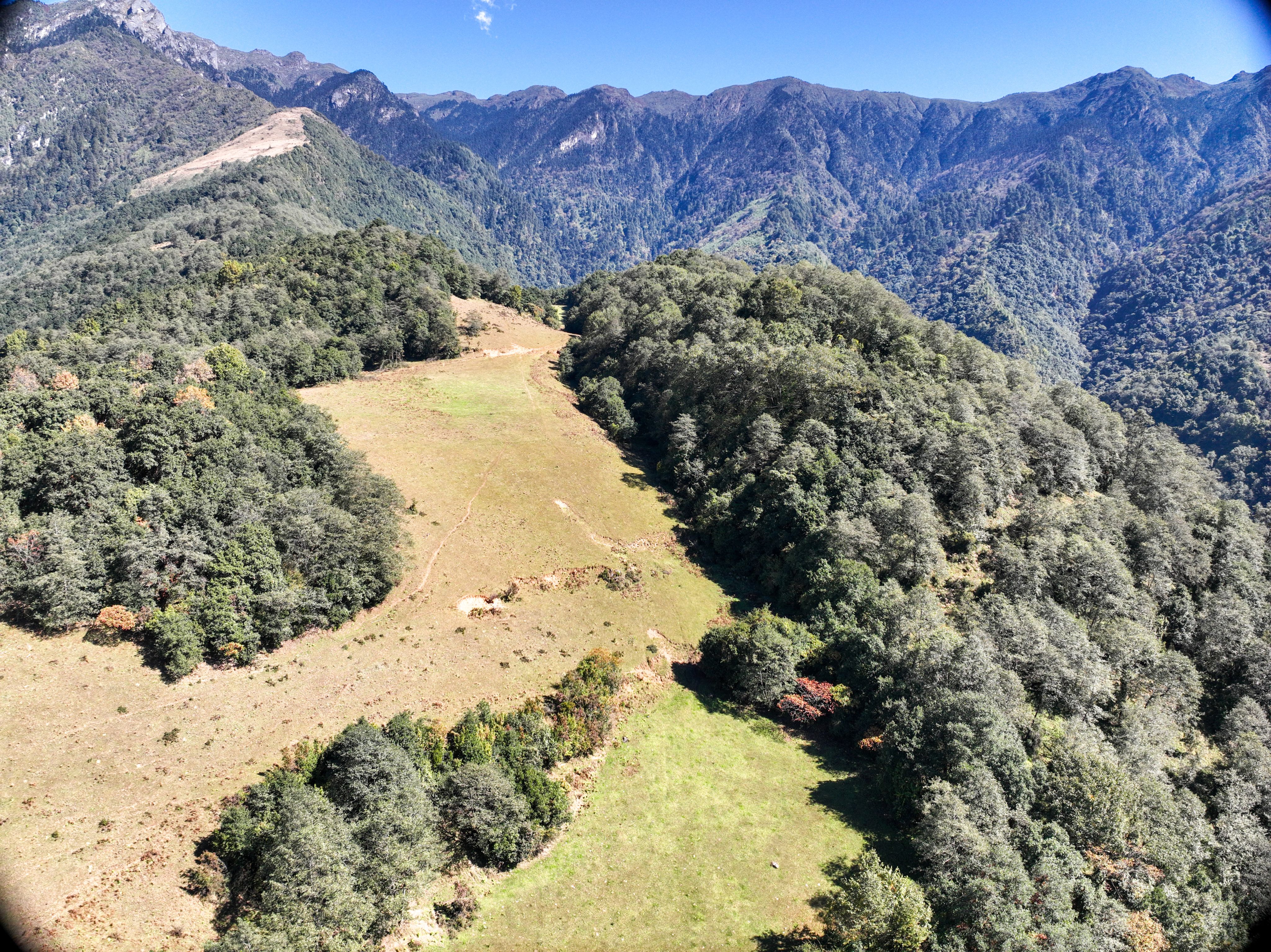
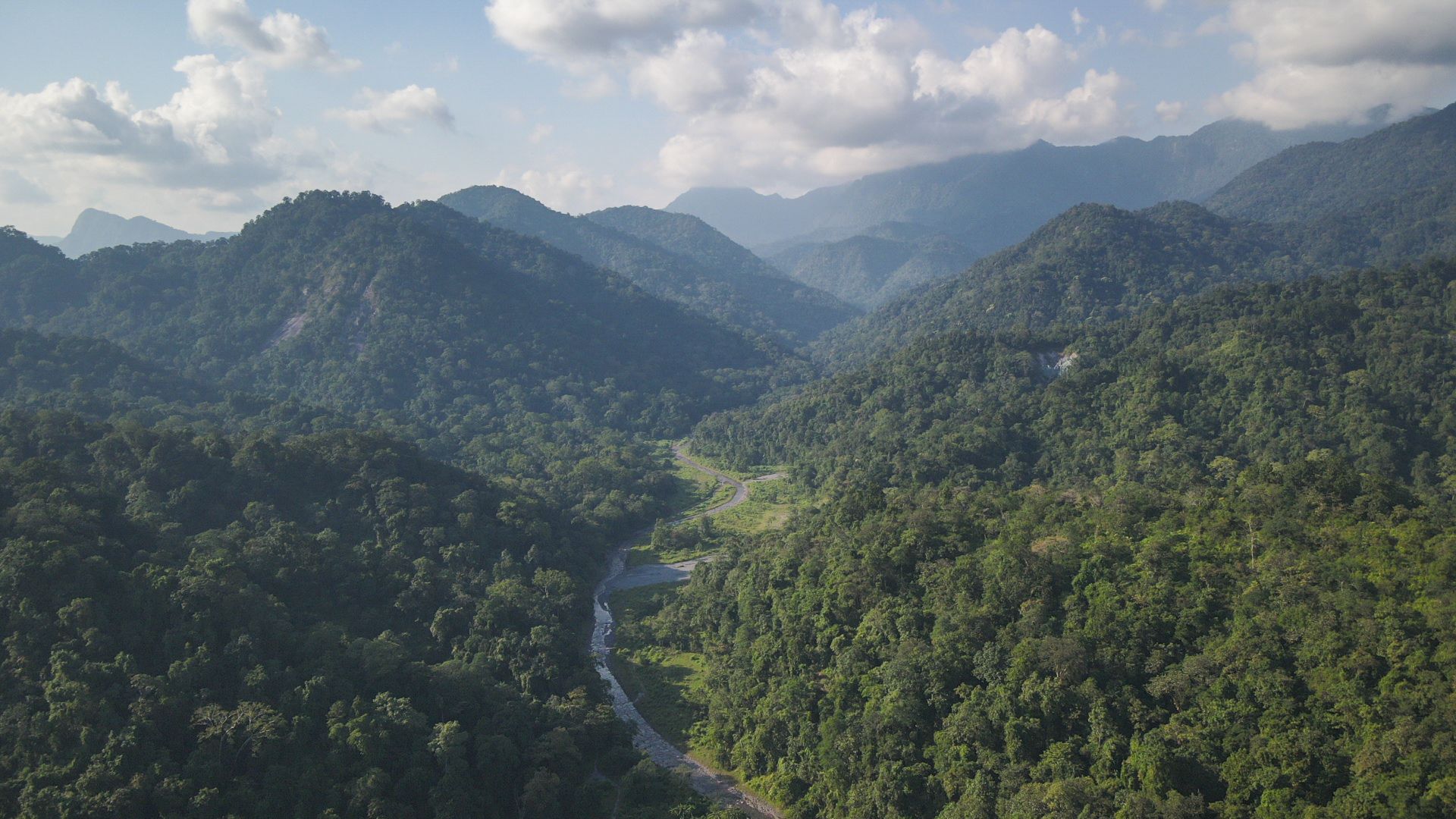
Nubi Gewog, Bhutan, one of the Tiger Impact Certificate pilot sites. © DoFPS Bhutan / WWF-US
Nubi Gewog, Bhutan, one of the Tiger Impact Certificate pilot sites. © DoFPS Bhutan / WWF-US
As these pilots move forward, the Tiger Conservation Coalition is working to demonstrate how innovative finance that is anchored in science, community partnership and transparency, can unlock new capital for tiger conservation, while setting a high bar for biodiversity investment more broadly.
Global Tiger Innovation Fund
On Global Tiger Day (29 July) 2025, WWF launched the Global Tiger Innovation Fund, a pioneering initiative led by WWF-Australia in collaboration with the WWF Network. Created to catalyse innovation in tiger conservation, it is the first major funding source dedicated to advancing innovation-specific solutions across Asia’s tiger range landscapes. The fund aims to identify, pilot and scale community-centered solutions that address persistent barriers to tiger recovery. Phase 1 has a focus on initiatives that:
- Generate scalable economic benefits from tiger recovery to incentivise community co-existence with tigers;
- Prevent and mitigate human-wildlife conflict in high-risk areas; and/or
- Establish sustainable finance mechanisms to support and scale long-term co-initiatives.
In this first Phase, from 21 Expressions of interest, six projects across three tiger range countries were invited to submit full proposals and have been selected for funding. Expected start dates are in early 2026 and these innovation projects will be running for up to two years. Two of the proposals in Thailand were joint Tiger Conservation Coalition submissions, illustrating the national collaboration efforts from members of the coalition.
“Initiatives like the Global Tiger Innovation Fund are key to scaling solutions from coexistence strategies to sustainable finance. The future of our world where the number of tigers is not just increasing but thriving and coexisting with humans is a reality that we can see and experience in our lifetime. We simply need to come together raising our ambitions and envisioning a world where tigers thrive.”
- H.E. Tshering Tobgay | Prime minister of Bhutan.
WWF Participates in First Assembly of the International Big Cat Alliance

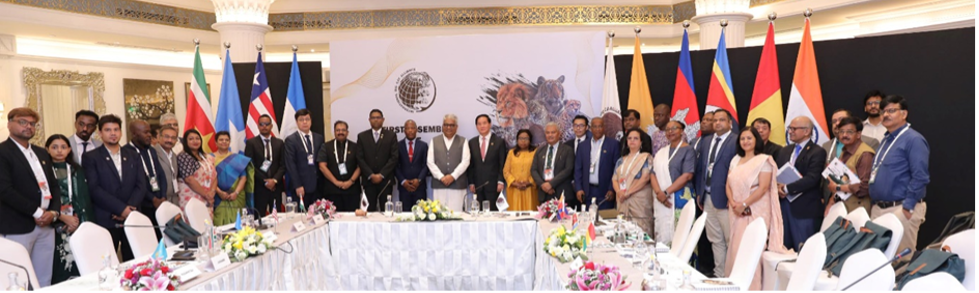
© IBCA secretariat
© IBCA secretariat
The International Big Cat Alliance (IBCA) Assembly took place on June 26 in New Delhi, and highlighted opportunities to better align conservation efforts for Big Cats globally. At the time, three tiger range countries were formally IBCA members (India, Bhutan, Cambodia), with others engaged through meetings (Bangladesh, Malaysia) or through requesting observer status (Kazakhstan, Thailand). WWF-India Secretary General and CEO, Ravi Singh, represented WWF at the meeting. CA|TS was noted as an IBCA program, including the secondment of its Regional Coordinator from WWF-India. The first IBCA Summit of participating Big Cat countries is planned for mid-2026.
Laos’ National Tiger Action Plan
The National Tiger Recovery Action Plan 2026-2035 for Laos has been finalised, providing a long-term national framework to guide efforts toward the recovery of wild tigers in priority ecological landscapes across the country. With no confirmed evidence of wild tigers in Laos since 2013 – when a tiger was last recorded by camera traps in Nam Et-Phou Louey National Park – this Action Plan (developed by the Ministry of Agriculture and Environment in partnership with WWF-Laos) provides a comprehensive framework to guide long-term efforts to restore tiger populations, strengthen law enforcement, improve habitat management, and coordinate action across agencies. It also addresses critical issues such as regulating tiger farms, combating illegal trade, restoring prey species, and raising public awareness to reduce demand for tiger products.
The final consultation meeting for the National Tiger Recovery Action Plan, organised by the Department of Forestry under the Ministry of Agriculture and Environment, was held on 26 December 2025 in Vientiane with support from WWF-Laos. The meeting, co-chaired by the Deputy Director General of the Department of Forestry, and Heron Holloway, Country Director of WWF-Laos, brought together provincial forestry authorities from areas with high tiger recovery potential, wildlife and law-enforcement agencies, conservation organisations, and other key partners.
"Once the National Tiger Recovery Action Plan is approved, its collective implementation will help restore forests, rebuild prey populations and strengthen protection in key landscapes. By working together, we can transform empty forests into healthy ecosystems and create the conditions needed for tigers to return over time."

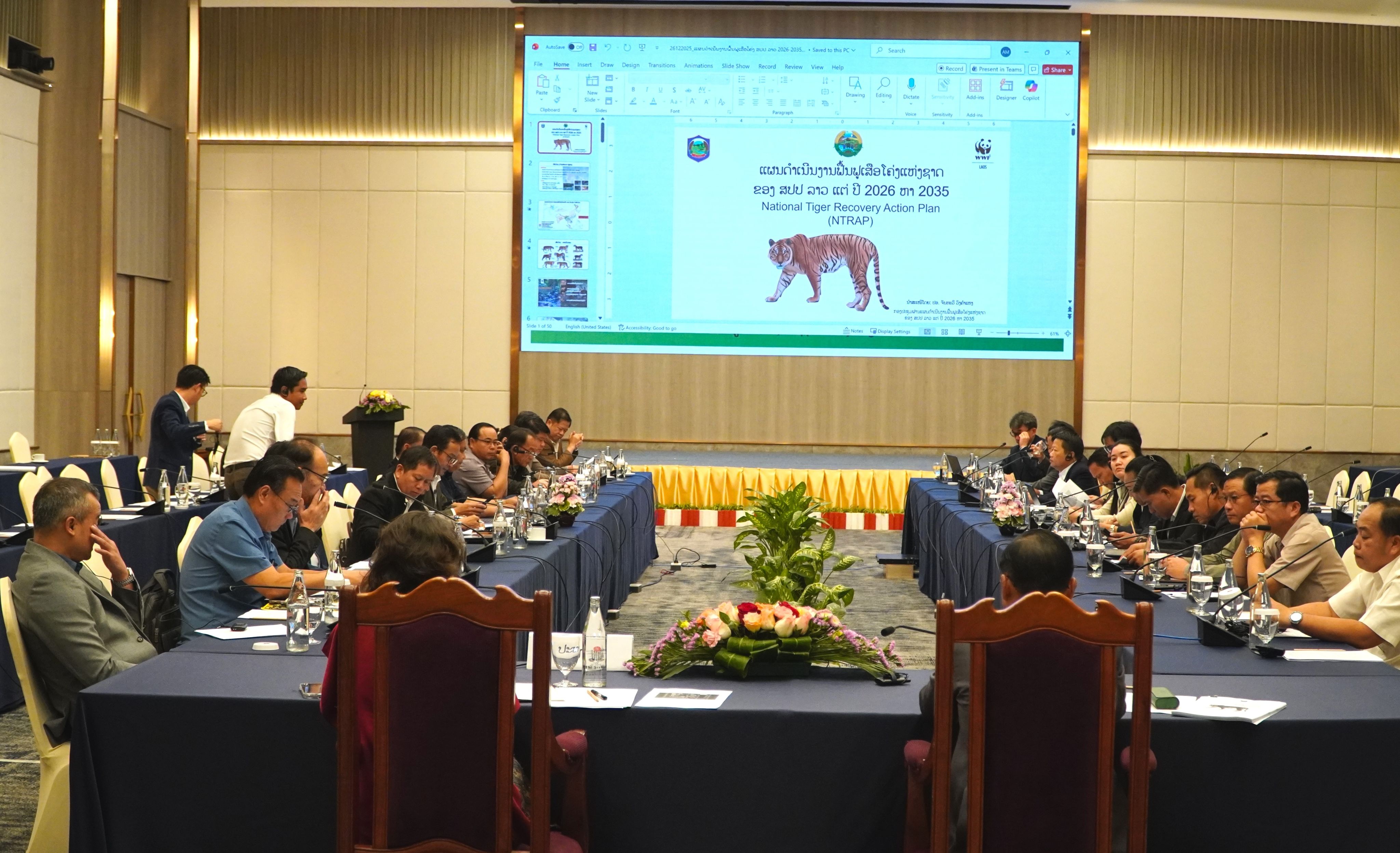
© WWF-Laos
© WWF-Laos
© WWF-Laos
© WWF-Laos


Heron Holloway, Country Director of WWF-Laos. © WWF-Laos
Heron Holloway, Country Director of WWF-Laos. © WWF-Laos

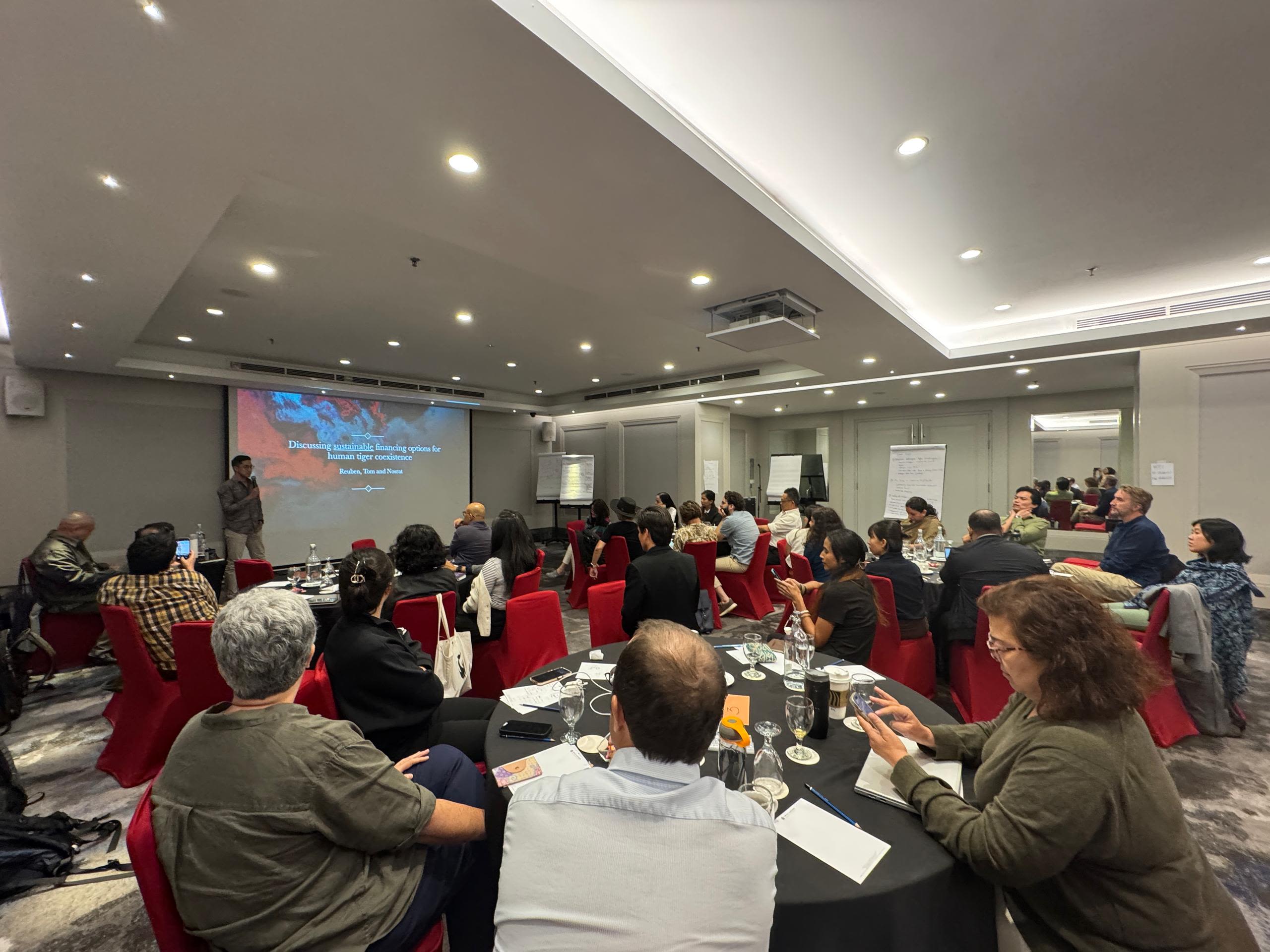
© Smriti Dahal / WWF
© Smriti Dahal / WWF
Civil Society Collaborate for Tigers in Malaysia
Malaysia’s tiger conservation movement gained strength in 2025 as civil society organisations came together across four key meetings. February kicked off with a national advocacy session, followed by two April events centred on Indigenous Peoples and local communities. The first of those focused on building coalitions and boosting IP&LC impact, while the following event marked the first ever meeting of the Tiger Conservation Coalition’s regional IP&LC working group. In July a workshop on ungulate recovery and monitoring laid the groundwork for a national strategy to restore prey species that are vital for tigers.
Technology Empowering Conservation Event, China
On July 29, 2025, a Global Tiger Day event in Jilin Province, co-hosted by the Northeast Tiger and Leopard National Park Administration and WWF China, celebrated the theme “Technology Empowers Conservation, Building a Harmonious Home.” Officials announced that China’s wild Amur tiger population has grown to an estimated 70 individuals, surpassing recovery targets. WWF emphasised expanding conservation in key habitats, strengthening community engagement, and developing strategies for human-tiger coexistence as populations rebound. Highlights at the event included the launch of the CCTV Tiger and Leopard Channel, ranger stories, and nature education activities. The event livestreams drew over 180 million views, and media coverage by outlets like Xinhua and CCTV reached 170 million people.

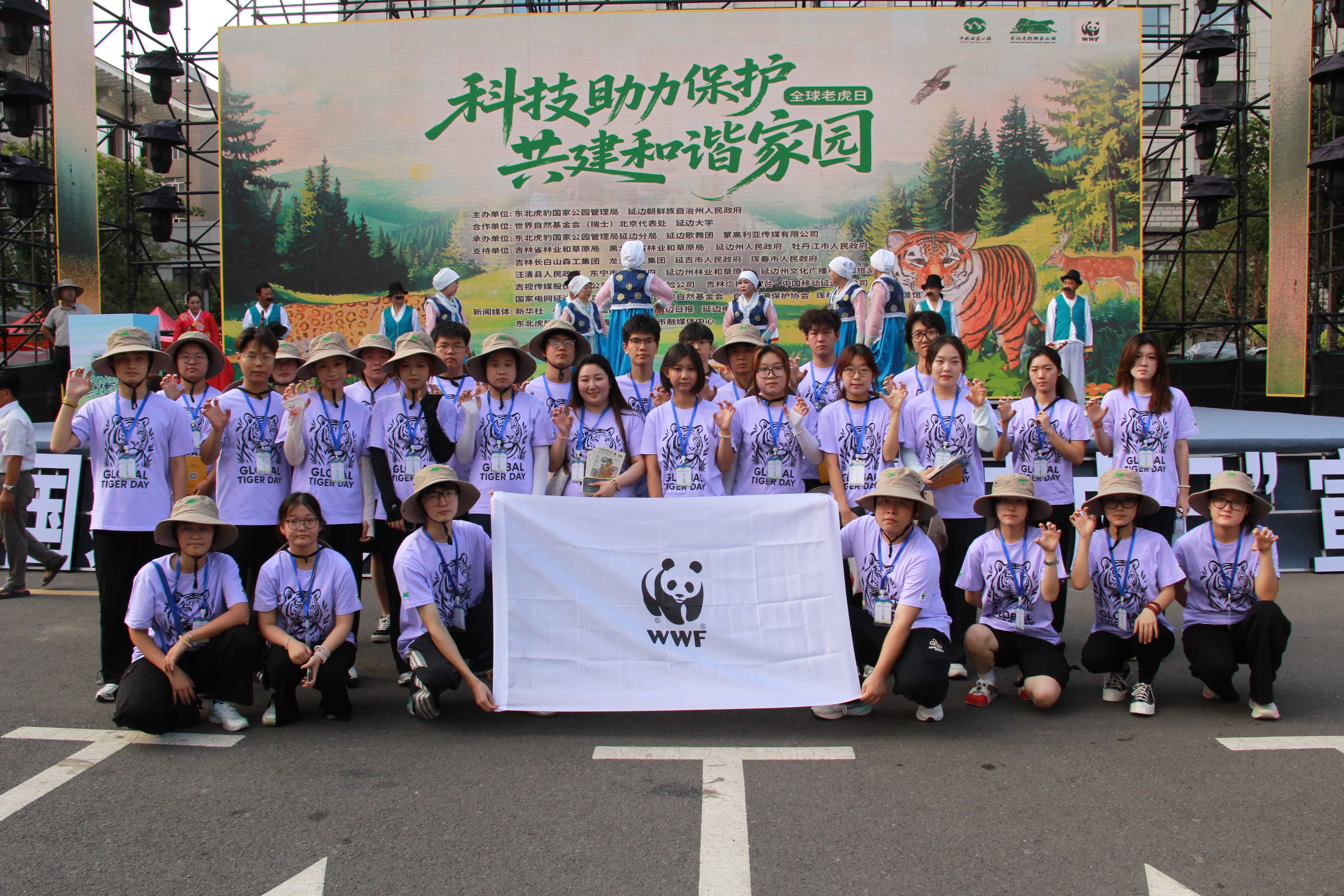
Global Tiger Day Volunteers. © Chen Xu / WWF-China
Global Tiger Day Volunteers. © Chen Xu / WWF-China

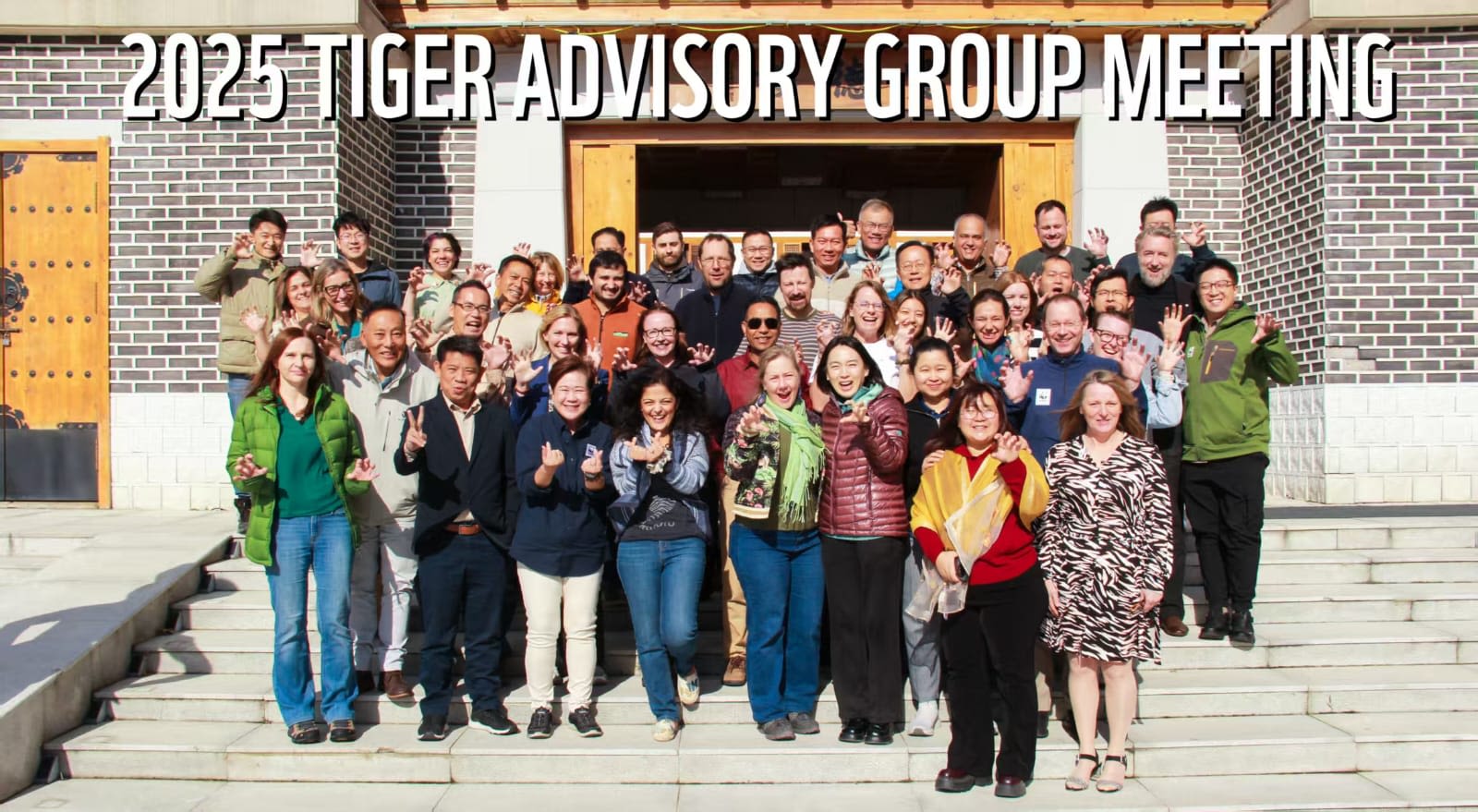
The Tiger Advisory Group of WWF gathered in Hunchun, China (27–29 October) for three days of focused collaboration and delivering our strategy for global tiger recovery. The meeting strengthened cross‑Network alignment, deepened knowledge‑sharing, and reinforced our collective commitment to delivering real impact for tigers and the communities who live alongside them. By bringing together expertise from tiger range countries and supporting offices the group reaffirmed a shared vision: working as one team to accelerate progress and keep momentum strong toward a future where tigers thrive in healthy, connected landscapes. © Chen Xu / WWF-China
The Tiger Advisory Group of WWF gathered in Hunchun, China (27–29 October) for three days of focused collaboration and delivering our strategy for global tiger recovery. The meeting strengthened cross‑Network alignment, deepened knowledge‑sharing, and reinforced our collective commitment to delivering real impact for tigers and the communities who live alongside them. By bringing together expertise from tiger range countries and supporting offices the group reaffirmed a shared vision: working as one team to accelerate progress and keep momentum strong toward a future where tigers thrive in healthy, connected landscapes. © Chen Xu / WWF-China
LOOKING FORWARD
As we enter 2026, the priority is to operationalise existing sustainable finance mechanisms, such as the Tiger Landscapes Investment Facility and Tiger Impact Certificates, while continuing to innovate and develop new models that can scale nature positive investments and impact. The Tiger Conservation Coalition plans to deepen collaboration at the tiger range country and site level, ensuring these interventions are embedded in national strategies and supported by strong partnerships with governments, civil society, and the private sector.
At the same time, WWF will work with contacts from the global to local level to ensure that tiger landscapes funding expands under existing major sources. As one example, the Tiger Conservation Coalition will be holding consultations, facilitating partnerships, and offering expertise to increase the likelihood that tiger conservation features in early GEF-9 cycle activities, following its July 2026 launch.
Taken together, these efforts will expand the field for funding potentials, and transform commitments into tangible outcomes for tigers, people, and landscapes.










 Built with Shorthand