
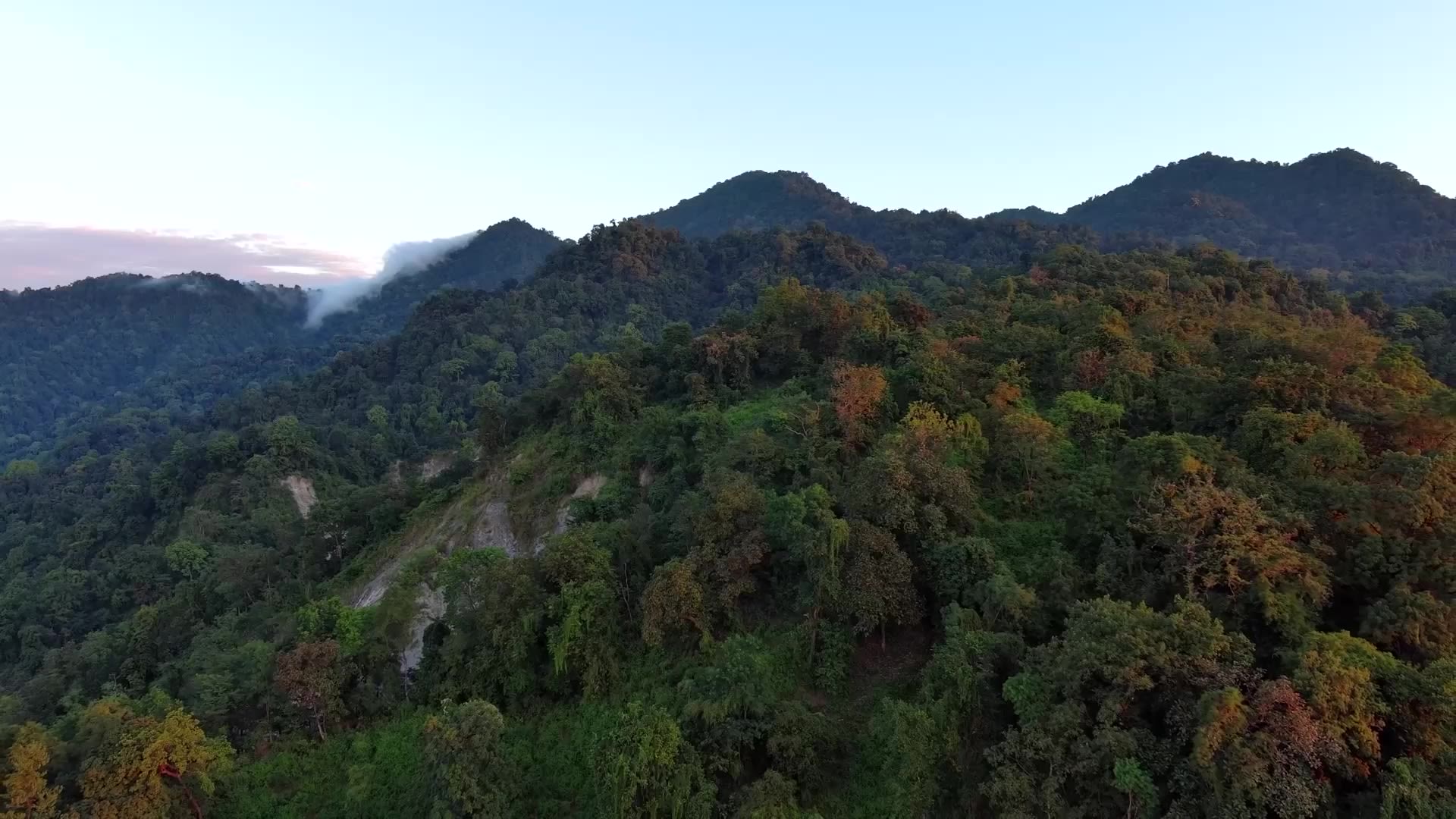

RANGE EXPANSION
Expanding tiger range is one of conservation’s boldest frontiers. Reconnecting fragmented habitats and restoring ecosystems where tigers have been extirpated is a challenge that takes decades, but every step forward is vital for the species’ survival, for biodiversity and for ourselves. Range expansion happens in two ways: through natural dispersal, as tigers reclaim their historic range, or through active reintroduction, where science and planning return tigers to landscapes that have long been without them. Both approaches are essential to securing the future of tigers.
This year brought promising signs. In Thailand, tigers are being photographed further north than in recent memory - evidence of natural recovery in a landscape once lacking the tigers' roar. At the same time, in Kazakhstan, one year after the historic arrival of tigers for breeding, efforts to rebuild prey populations and strengthen habitat resilience continue despite harsh winters, summer heat and wildfires. These milestones remind us that range expansion is ambitious, long-term work, but each success moves us closer to a future where tigers return to Asia’s forests and grasslands.
Strengthening protection in a tiger expansion and poaching hotspot, India
The Asifabad District located in the Godavari tiger recovery landscape, is both a crucial tiger dispersal corridor and a known wildlife trafficking route. Authorities have launched a pioneering joint Police–Forest Task Force and Special Investigation Team, which brings together frontline officers from police and forest departments every 15 days to proactively detect and deter wildlife crimes and criminal networks. With these developments, the district is now being transformed into a functional corridor with enhanced protection measures for tigers and other key species, enabled through multi-agency coordination and monitored by senior officials. WWF-India is supporting this task force, primarily the police, with capacity building related to mitigating wildlife crime.
Tigers continue to move north in Thailand
For years it was thought tigers had been lost from Thailand’s Mae Ping-Om Koi Forest Complex, until a tiger pugmark was discovered in 2022. Subsequently, the protected area staff set camera traps and recorded a tiger in the same area that year. WWF-Thailand has been supporting the Complex since 2024 and it’s thought the tiger naturally dispersed from source tiger populations in the Western Forest Complex 100 km to the south, where decades of conservation efforts in partnership with WWF-Thailand and other Tiger Conservation Coalition members have seen the population recover. In 2025, three additional tigers were recorded in the Mae Ping Corridor, which links the two Forest Complexes; further efforts to improve connectivity are underway.
These continued sightings of new tigers in northern Thailand proves it is possible to bring tigers back to their former range with a vision, sustained funding and strong partnerships with governments and communities.
Strengthening protection in CENTRAL AND southern Thailand
Poaching remains one of the greatest threats to tiger survival. To address this, in 2025 WWF-Thailand in partnership with the Department of National Parks and Panthera’s Tiger Programme, conducted strategic threat assessments grounded in crime theory in two high-potential tiger recovery sites: the Phu Khieo–Nam Nao Forest Complex and the Hala Bala Wildlife Sanctuary.
The Phu Khieo–Nam Nao Forest Complex is recognised in the government of Thailand’s Tiger Action Plan 2022–2034 as one of the most promising sites to begin range expansion and to pilot tiger translocation. Meanwhile, Hala Bala Wildlife Sanctuary, which connects to Malaysia’s Royal Belum State Park, harbours tropical evergreen ecosystems rare in Thailand and supports a diverse range of megafauna. It also shelters the last remaining tigers in Thailand’s far-south, individuals that likely roam across the international border.
Moving forward, the next phase of action requires a deep understanding of the origins and dynamics of threats to wildlife in these areas. The research from these assessments is now being analysed and the findings will inform and refine future protection strategies, ensuring that tigers and their prey can thrive in a safer, more resilient landscape.
Gamma: A symbol of hope for Thailand’s tigers
In late 2023, deep within Khlong Lan National Park, a cub named Gamma was born—the first ever successfully raised in this national park.

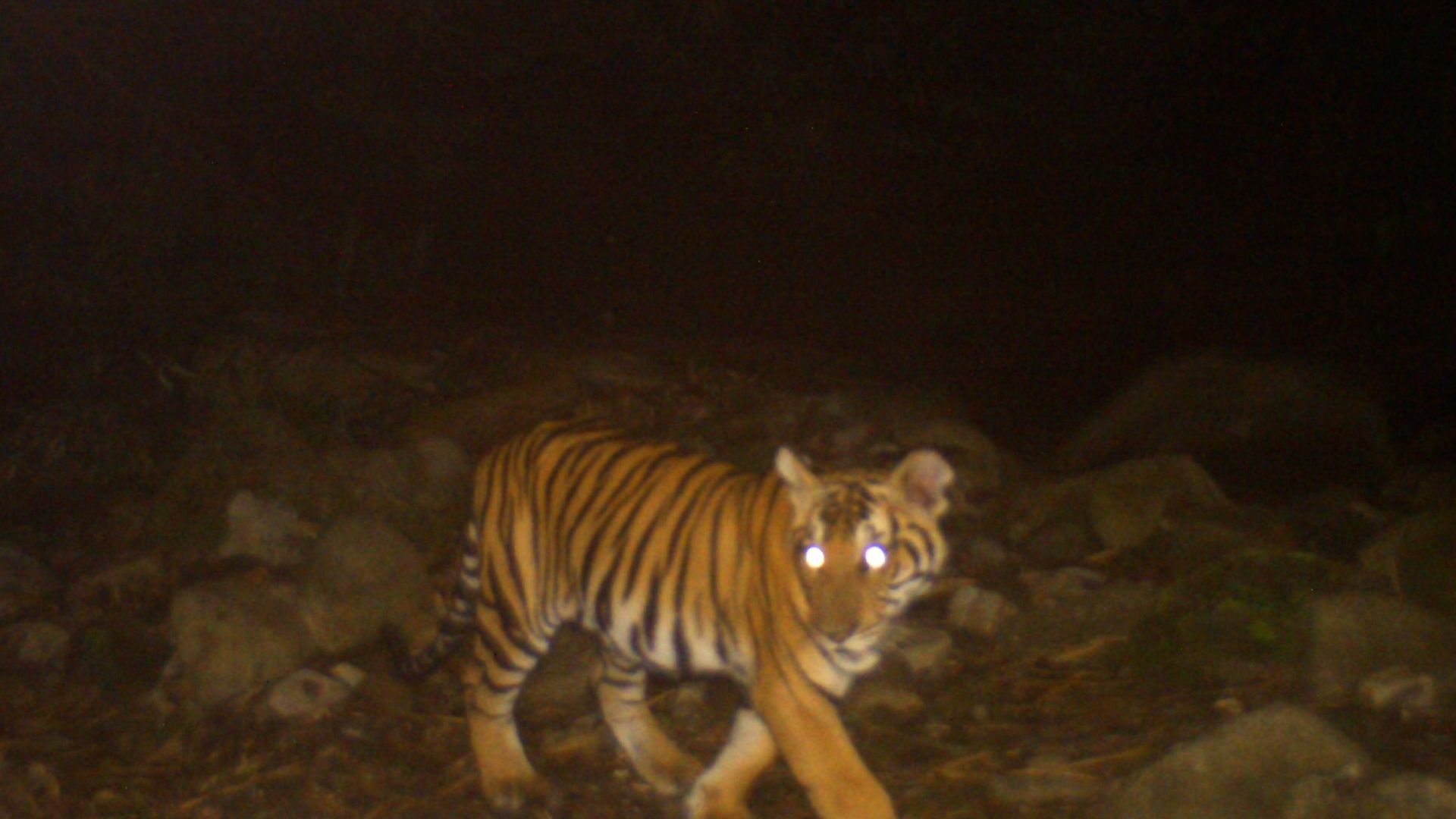
© DNP / WWF-Thailand
© DNP / WWF-Thailand
By November 2025, after fears of his disappearance, camera traps confirmed Gamma had dispersed nearly 70 km north to Lan Sang National Park. While his birth highlights the success of prey recovery efforts driven by sambar reintroductions and grassland restoration, his journey demonstrates that restored grasslands, prey recovery and connected corridors are working, enabling tigers to thrive and move safely through the Mae Ping Corridor, connecting the Western Forest Complex and the Mae Ping Forest Complex. His movement also shows that the Western Forest Complex has become a source site, contributing to metapopulation strengthening. Together, these milestones validate long-term conservation investments, with Gamma’s survival to adulthood reflecting years of anti-poaching work and habitat protection.
Gamma’s story is a powerful symbol of progress and hope for Thailand’s tiger recovery goals.
“For WWF-Thailand, tiger recovery is not about saving a single species, it is about securing entire living landscapes. By expanding and formally designating protected areas, advancing Other Effective Area-Based Conservation Measures and reconnecting forest systems, we are creating the conditions wildlife needs to survive, disperse and reclaim its natural range.
In close partnership with the Department of National Parks, Wildlife and Plant Conservation and key allies, these efforts have strengthened the Greater DTL–Mae Ping Tiger Corridor, ensuring that forests beyond park boundaries are not only connected, but effectively protected.
The journey of Gamma brings this vision to life. Born in Khlong Lan National Park, this young male tiger dispersed nearly 70 km north to Lan Sang National Park, surviving one of the most vulnerable stages of a tiger’s life. His movement is clear proof that protected, connected and well-managed landscapes work.
Thailand is now the only country in Southeast Asia where wild tiger numbers are increasing. Gamma’s journey shows that when we protect more, connect better and patrol smarter, tigers return.”
- Suphisit Jitvijak | Program Lead, Habitat Protection & Connectivity, WWF-Thailand
FEATURE STORY: Tigers Soon to Return to the Wild in kazakhstan
One year after the historic translocation of captive tigers from the Netherlands to Kazakhstan for breeding and reintroduction, these iconic predators are adapting well to their semi-wild home in the Ile-Balkhash Reserve. The reserve’s climate and habitat structure fully meet the species’ needs, and a dedicated team of rangers, biologists and veterinarians monitor each animal daily to ensure their health and safety.
Community support has grown year on year, and in 2025 a new environmental education installation at a local school serves as a permanent platform to inspire young people and foster respect for nature. Meanwhile, anti-conflict teams have undergone specialised first-aid training, including practical simulations to prepare for emergencies and ensure coexistence between people and wildlife.
Wild tigers have not existed in Kazakhstan for nearly eight decades. These steps mark continued commitment and support to enable Kazakhstan’s tiger recovery journey, combining science, education and preparedness to build a future where tigers can once again roam the plains of Kazakhstan.
Ungulate Recovery
In preparation for the historic return of tigers to the Ile-Balkhash Reserve, WWF-Central Asia is supporting the government to restore healthy ungulate populations, an essential step for sustaining big cats. Key actions include reintroducing kulan (wild ass) and Bukhara deer, providing winter feeding stations with hay, barley and corn, creating watering points and advancing reforestation and landscape restoration. WWF also provides technical support to strengthen reserve management, helping control poaching and grazing pressures.

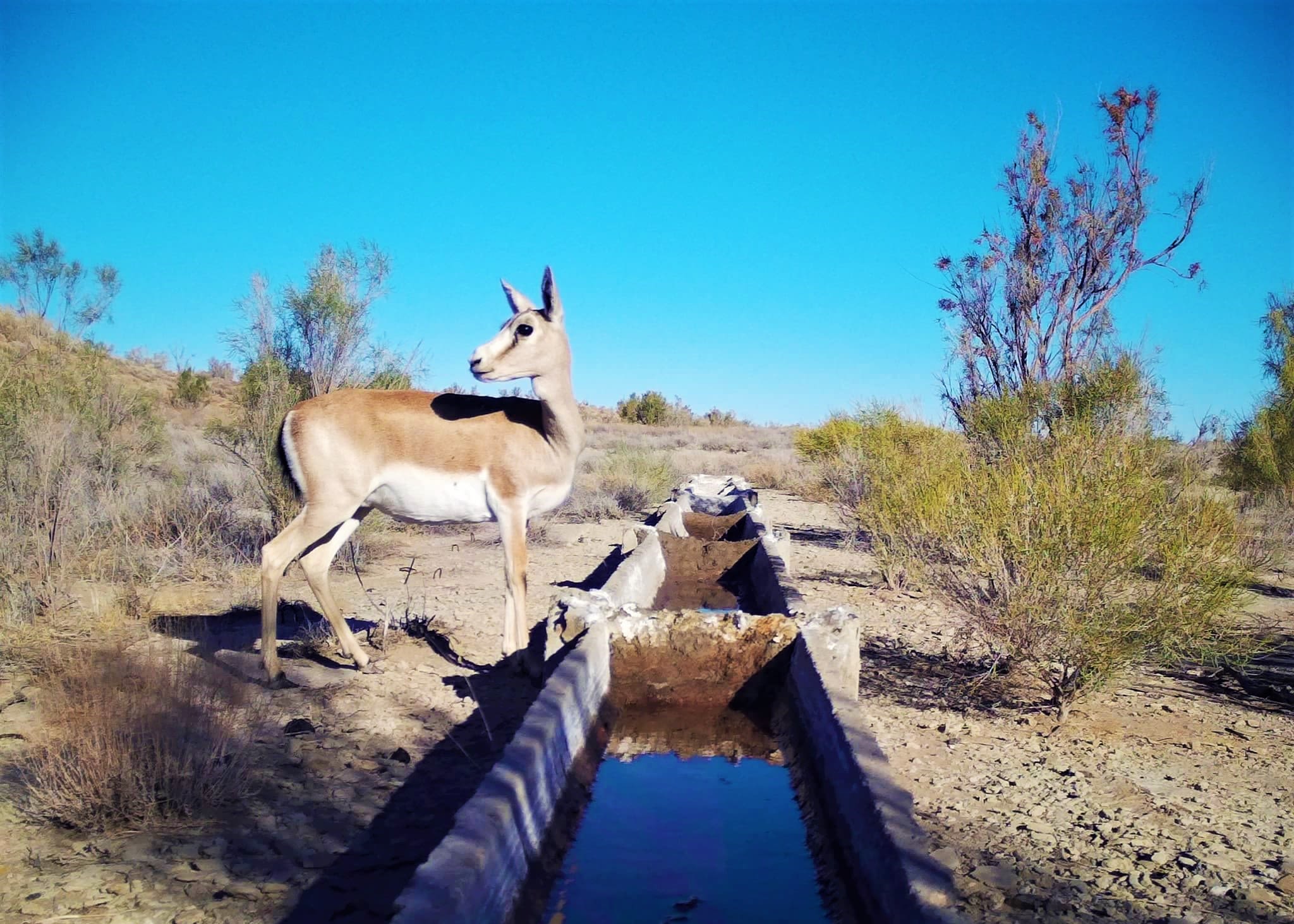
A goitered gazelle in Ile Balkhash. © WWF-Central Asia
A goitered gazelle in Ile Balkhash. © WWF-Central Asia
While these efforts are showing positive results, challenges remain. Harsh weather extremes from -40°C winters to +40°C summers and wildfires pose ongoing risks. Despite these hurdles, the commitment to rebuilding a robust prey base is laying the foundation for a thriving ecosystem where tigers can one day roam freely again.

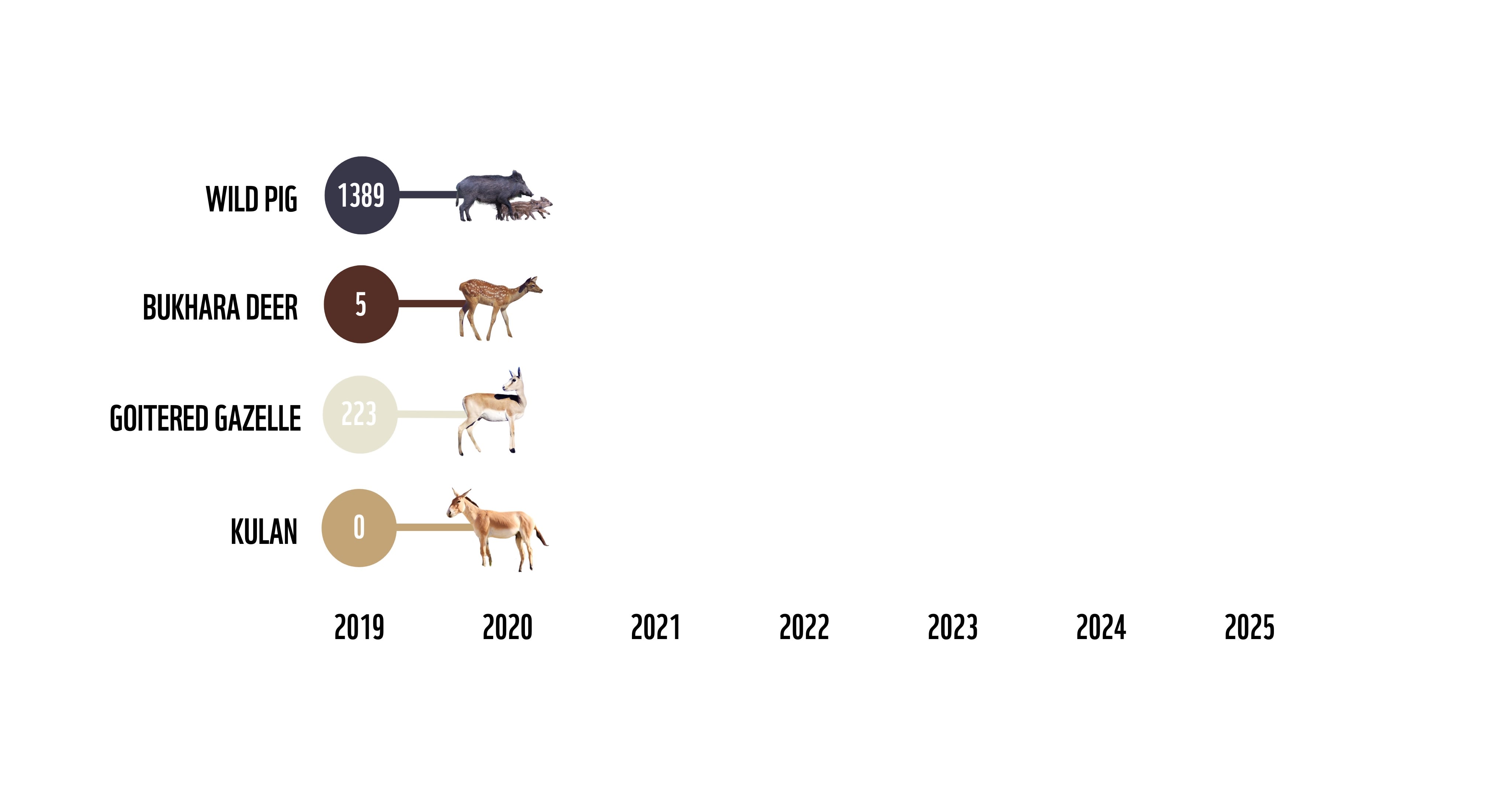

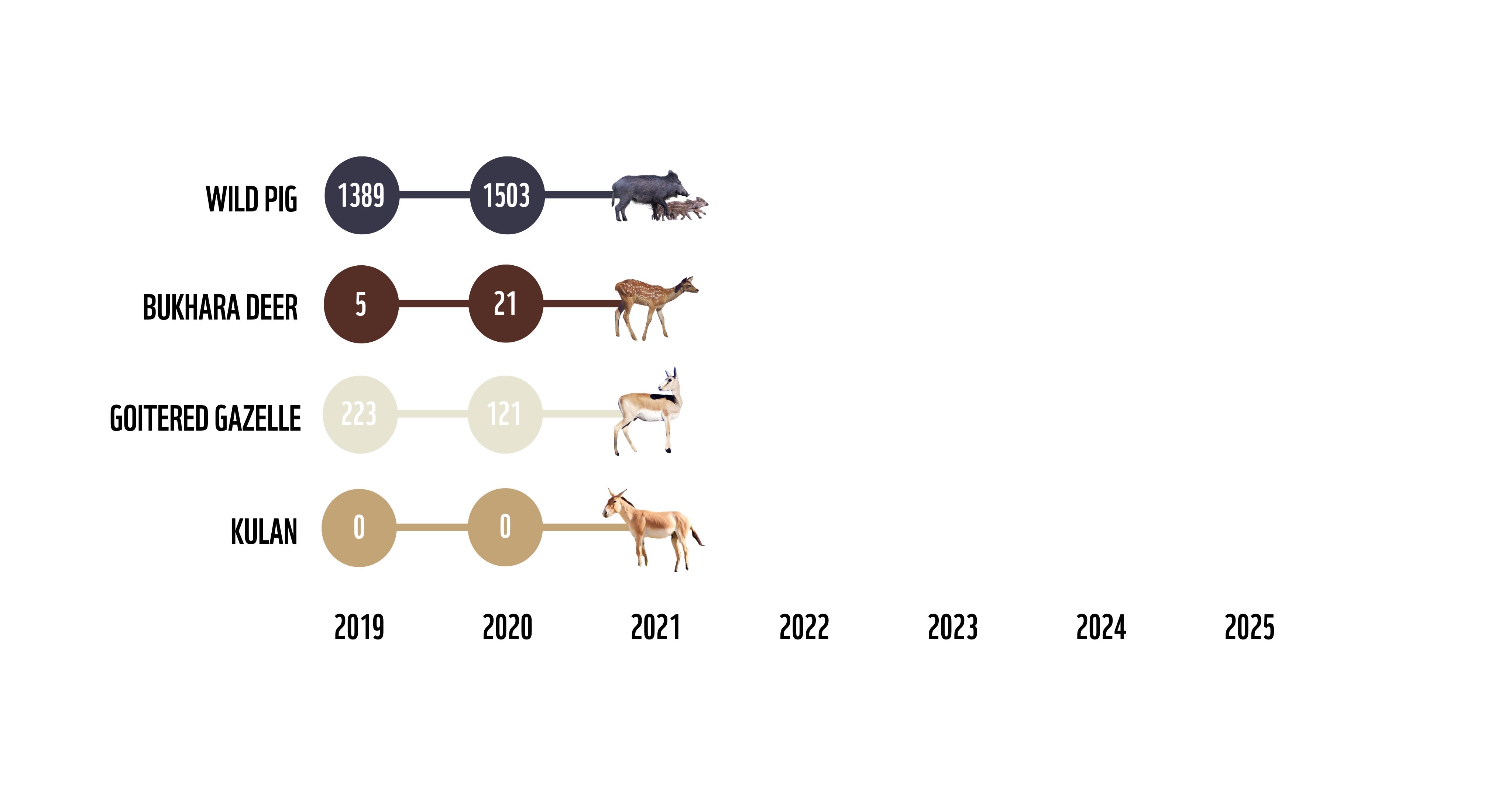

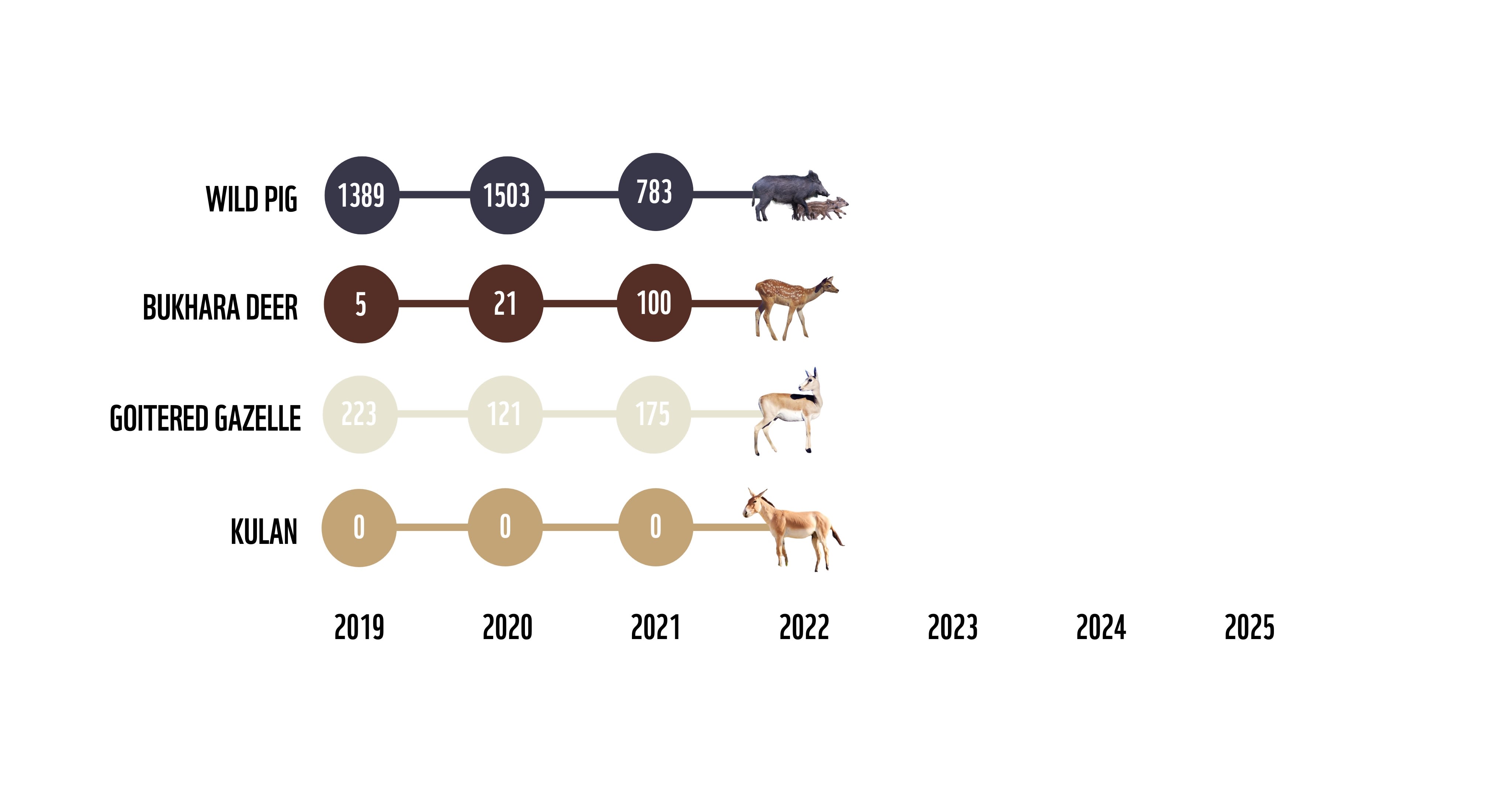

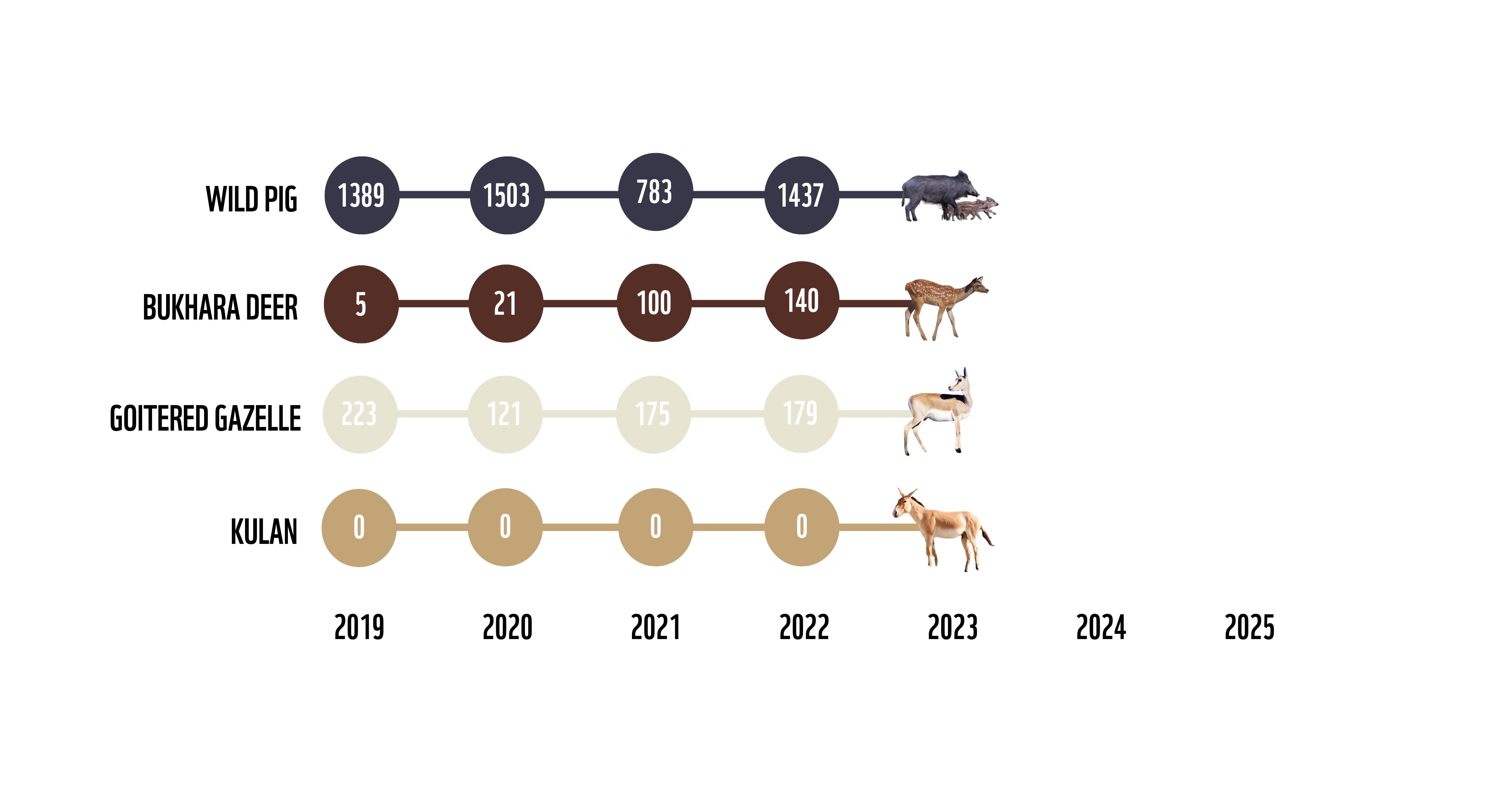

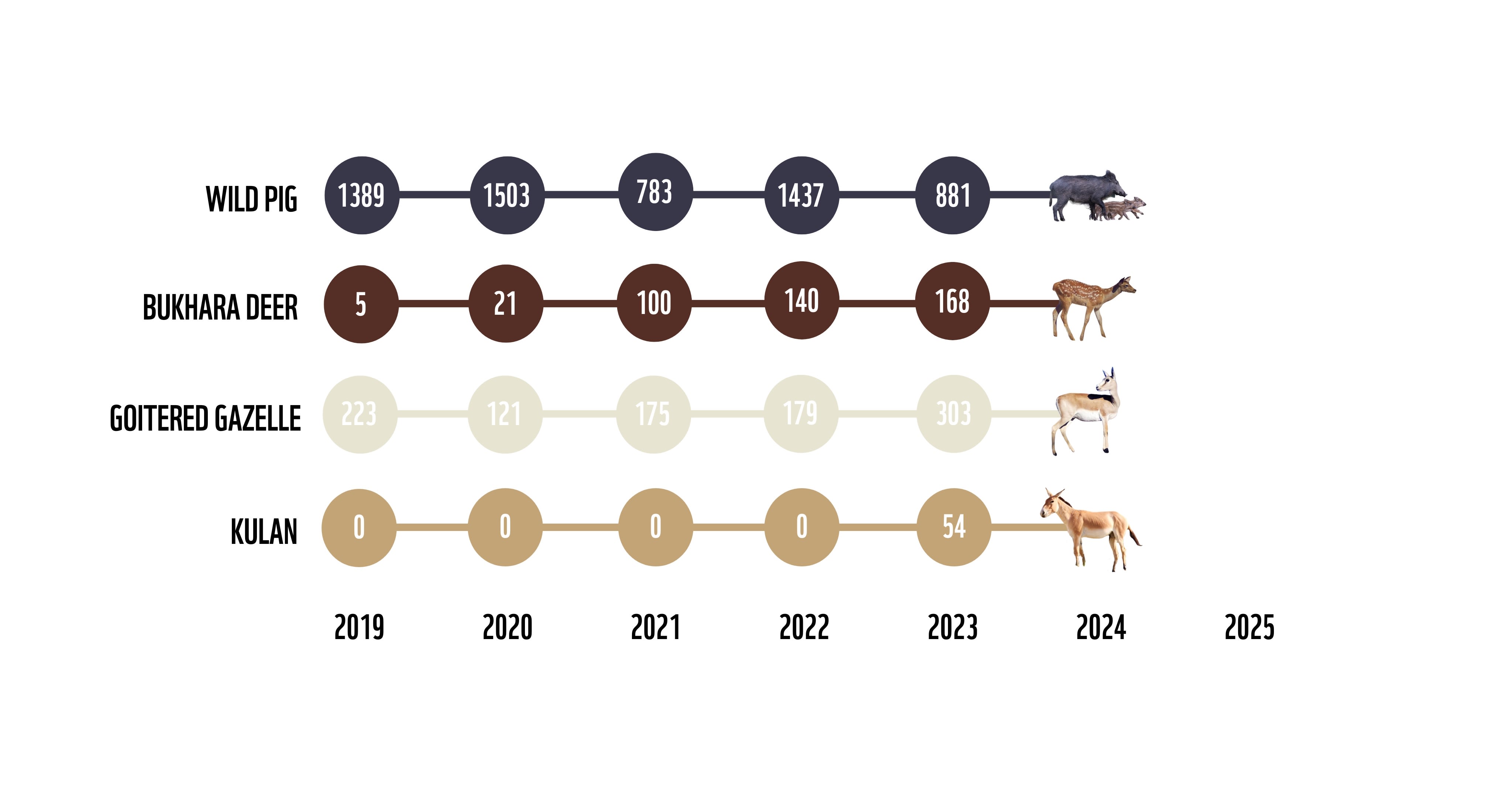

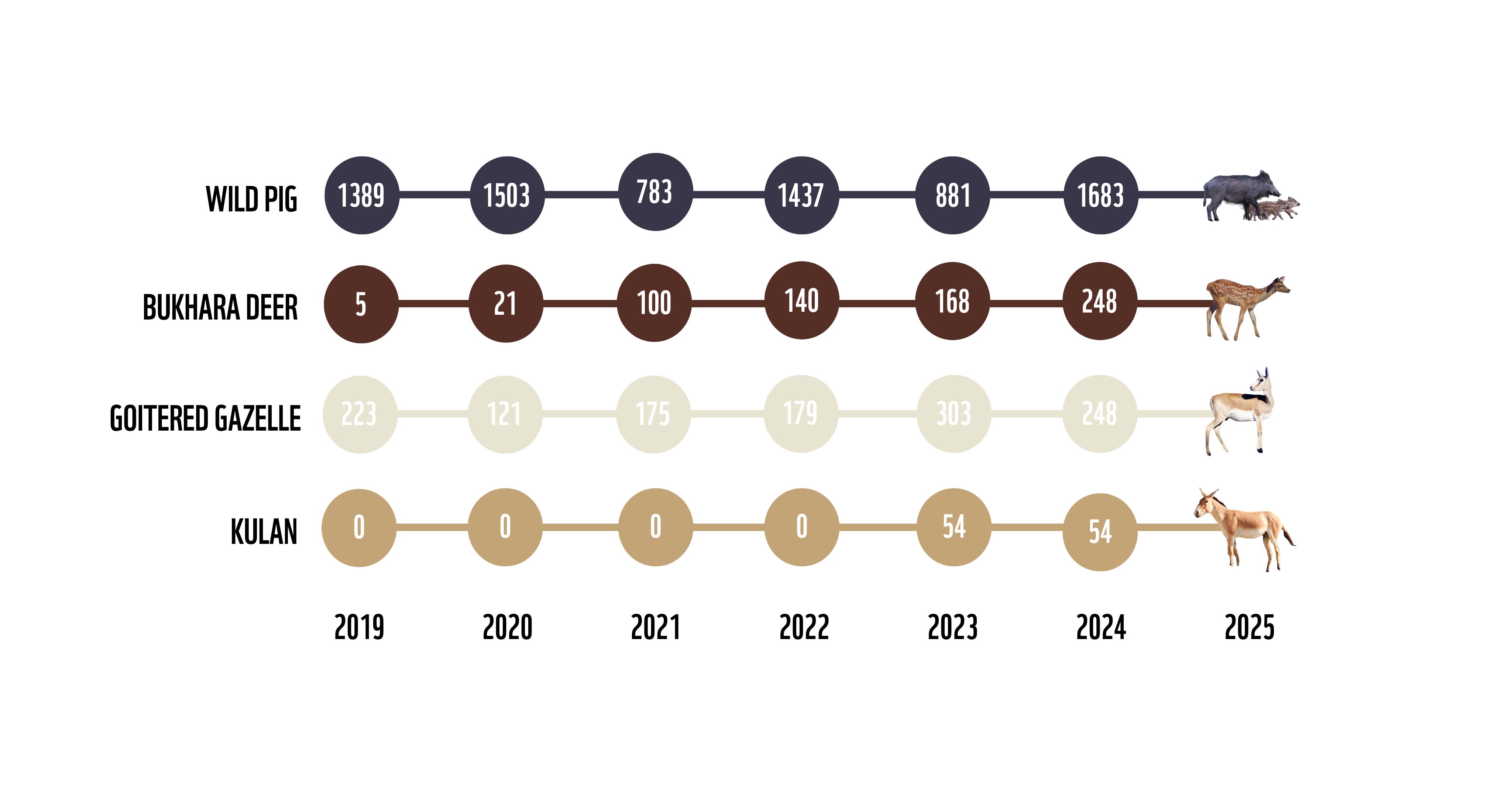

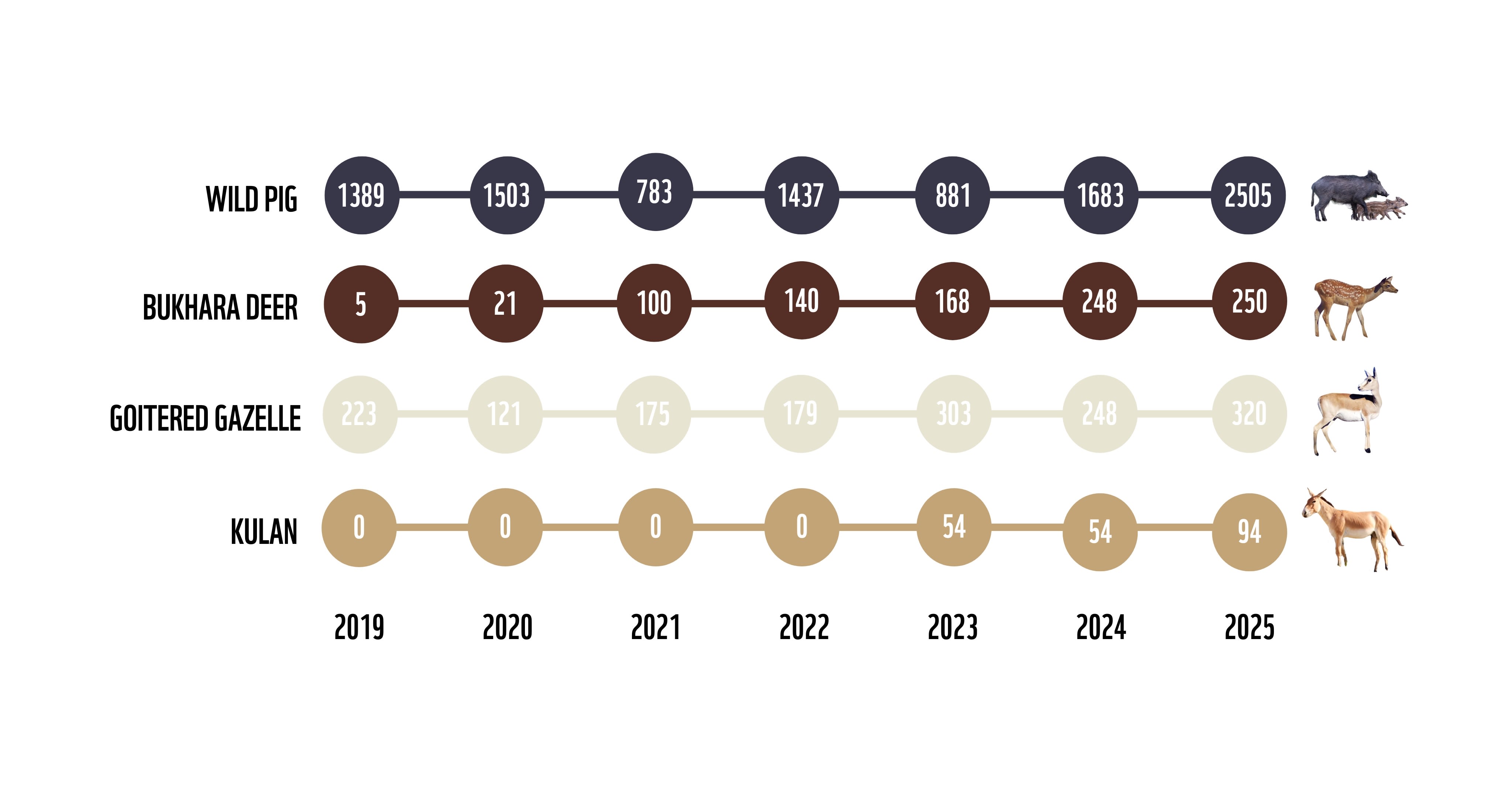
Here's the population of ungulates in Ile-Balkhash Nature Reserve from 2019-2025. Populations of tiger prey are recovering thanks to a combination of reintroductions, habitat restoration and supplementary feeding.
In 2020, an additional 16 Bukhara deer were released to join the initial five while a further ~50 individuals were translocated to a pre-release site in the area.
In 2021, the creation of eight watering holes contributed to an increase in gazelle abundance.
The wild pig population naturally fluctuates over the years but shows an overall positive trend.
In 2023, 54 Kulan were reintroduced to Ile-Balkhash after being absent from Kazakhstan the ecosystem since the 1930's.
Over the years, the composition of herbivores shifts with larger species such as deer and kulan increasing relative to smaller-bodied wild pig and gazelle. Primarily due to reintroduction efforts the total biomass of larger species has risen from roughly 1% in 2019 to about 30% in 2025.
Because larger prey are critical for supporting tiger reproduction, this change is ecologically significant.
In 2025, there was the first successful breeding in the Kulan population and an additional 19 individuals were reintroduced to diversify the genetic pool.

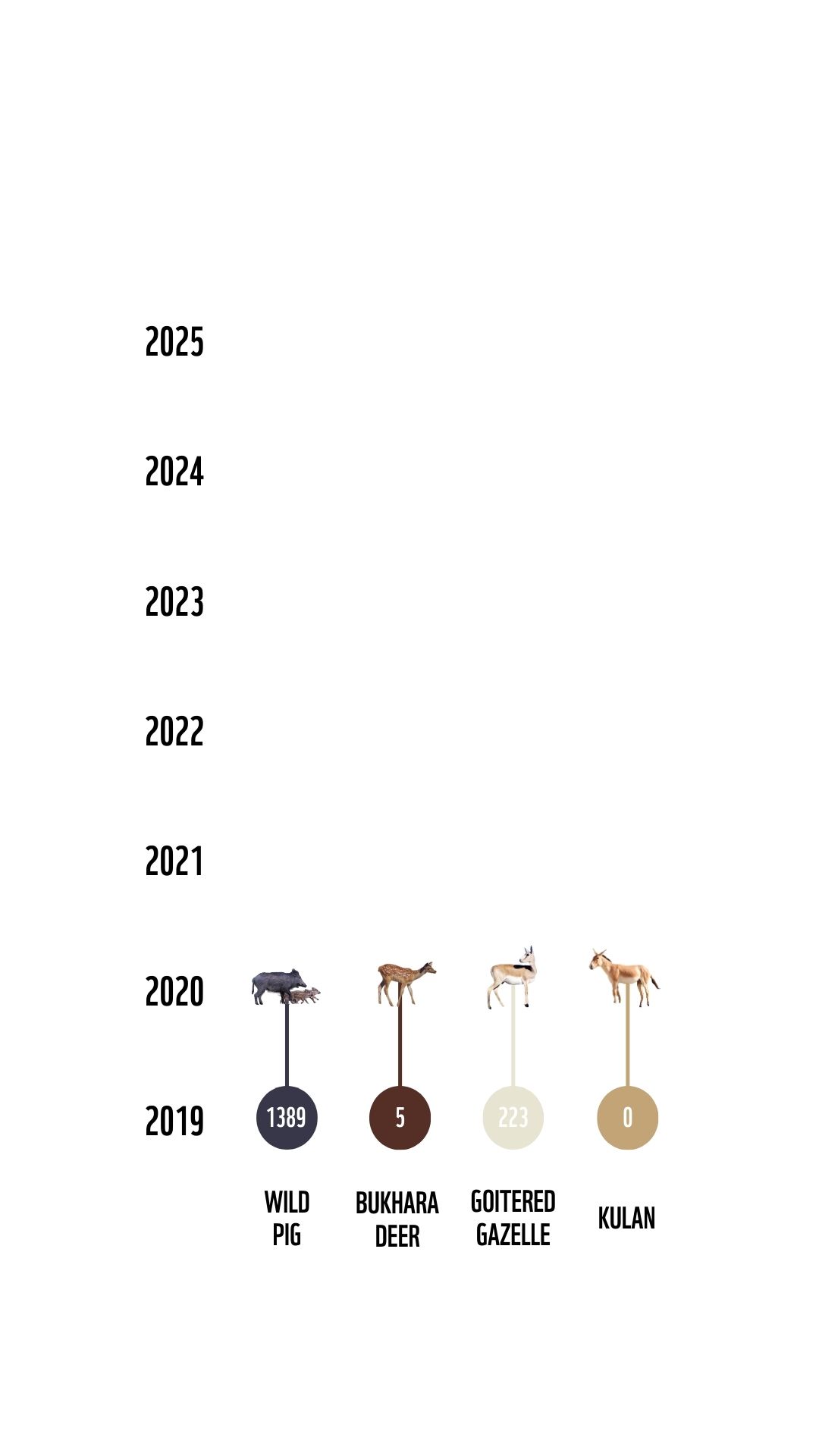

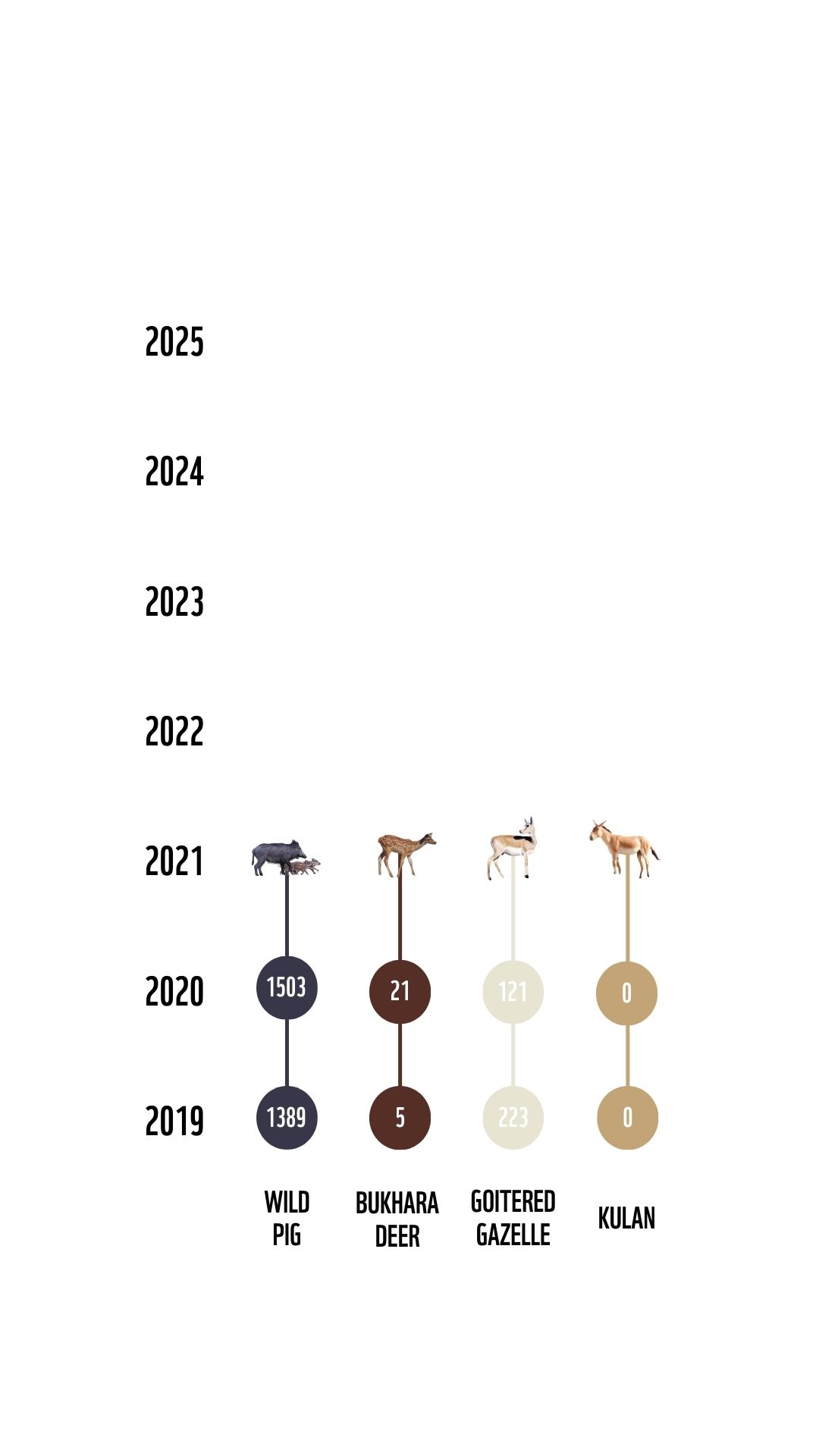

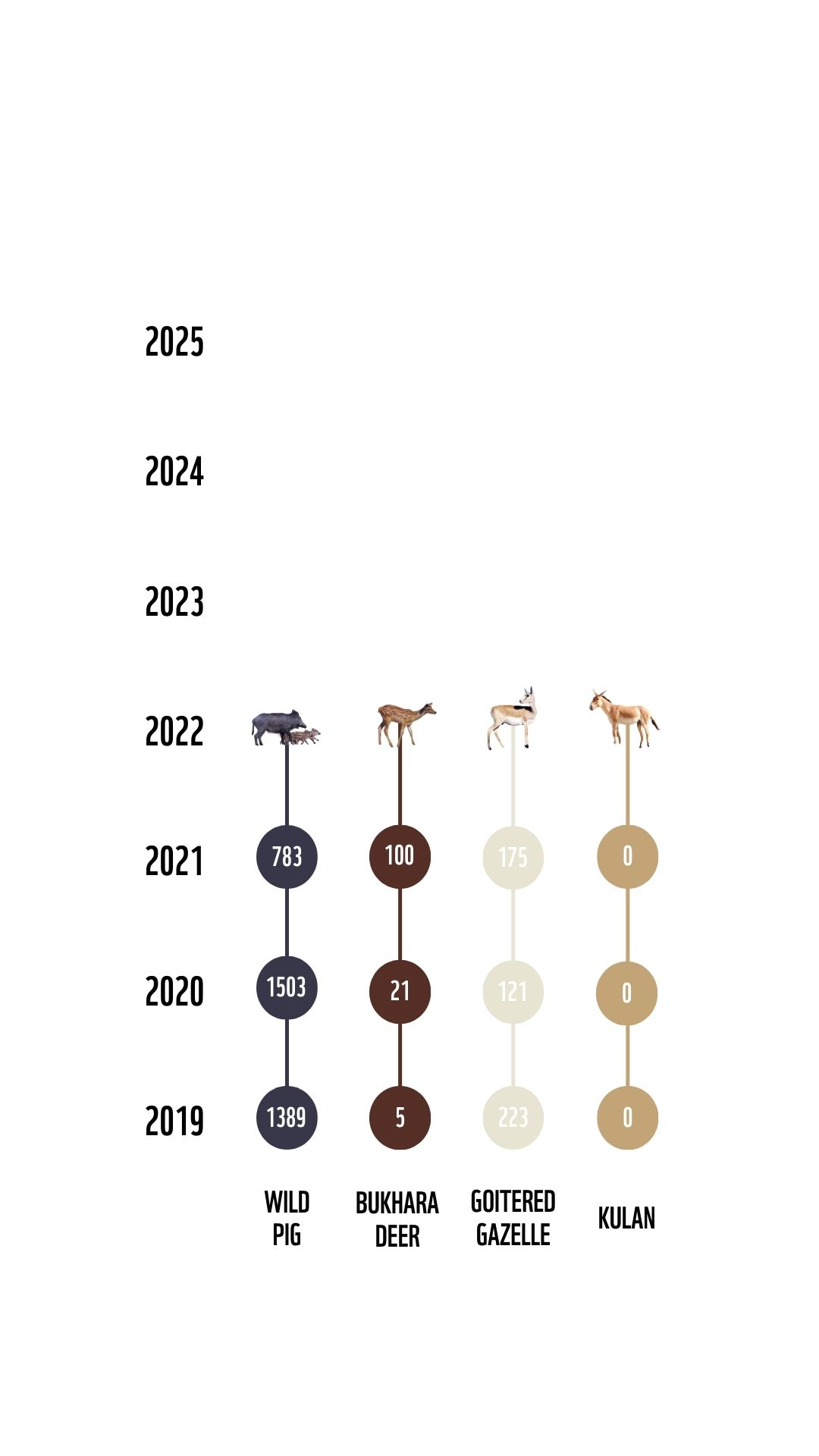

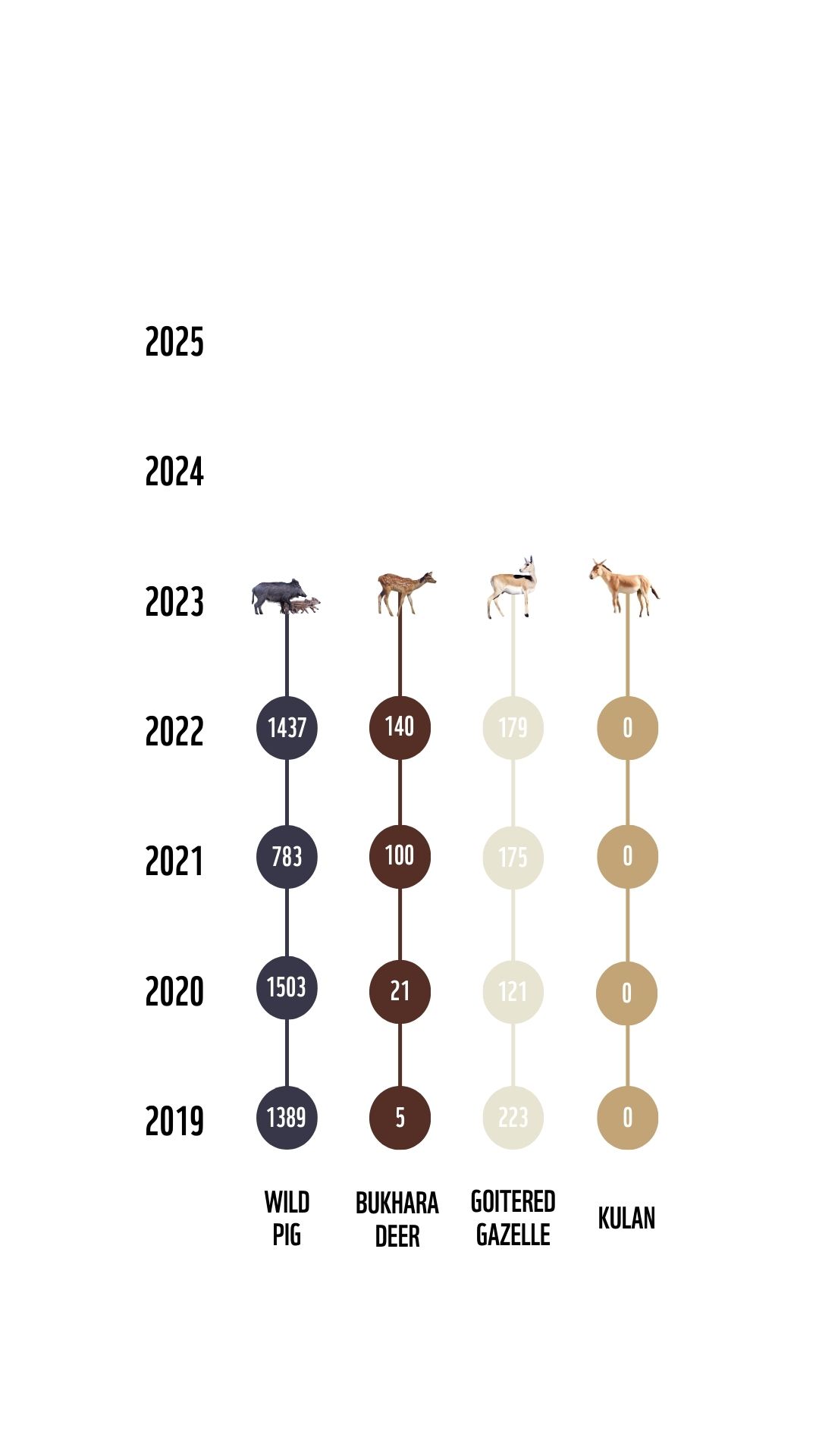

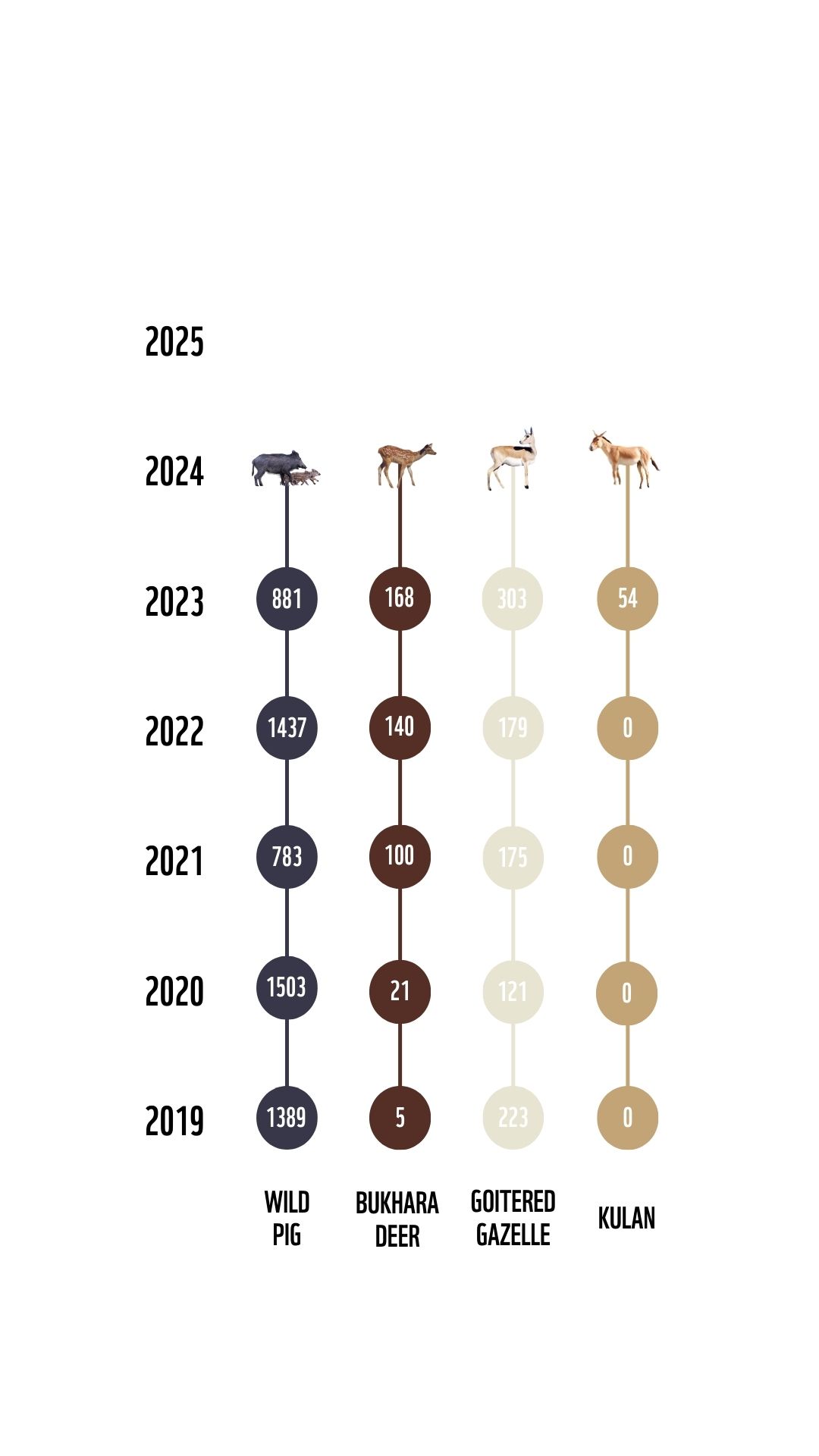

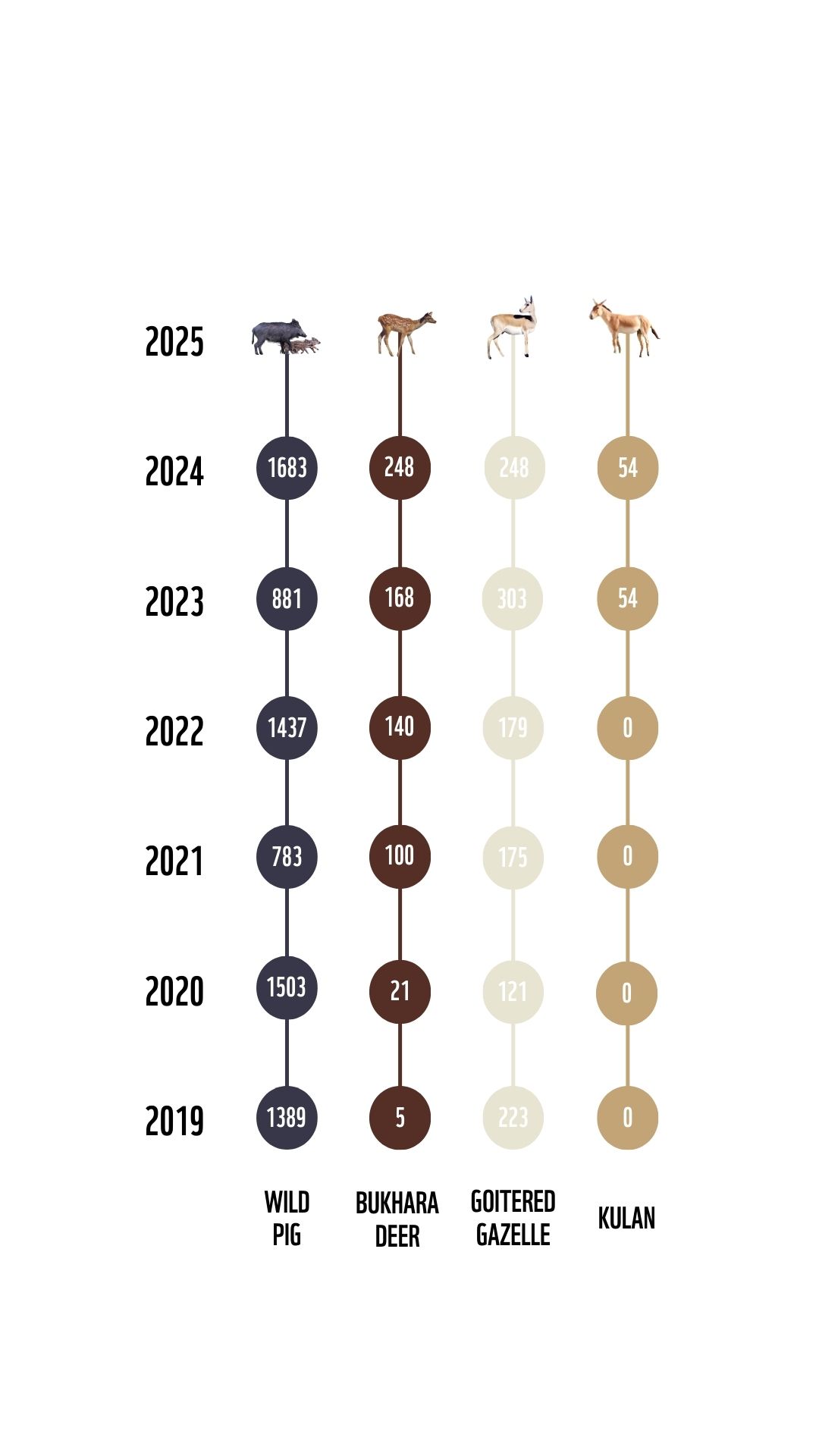

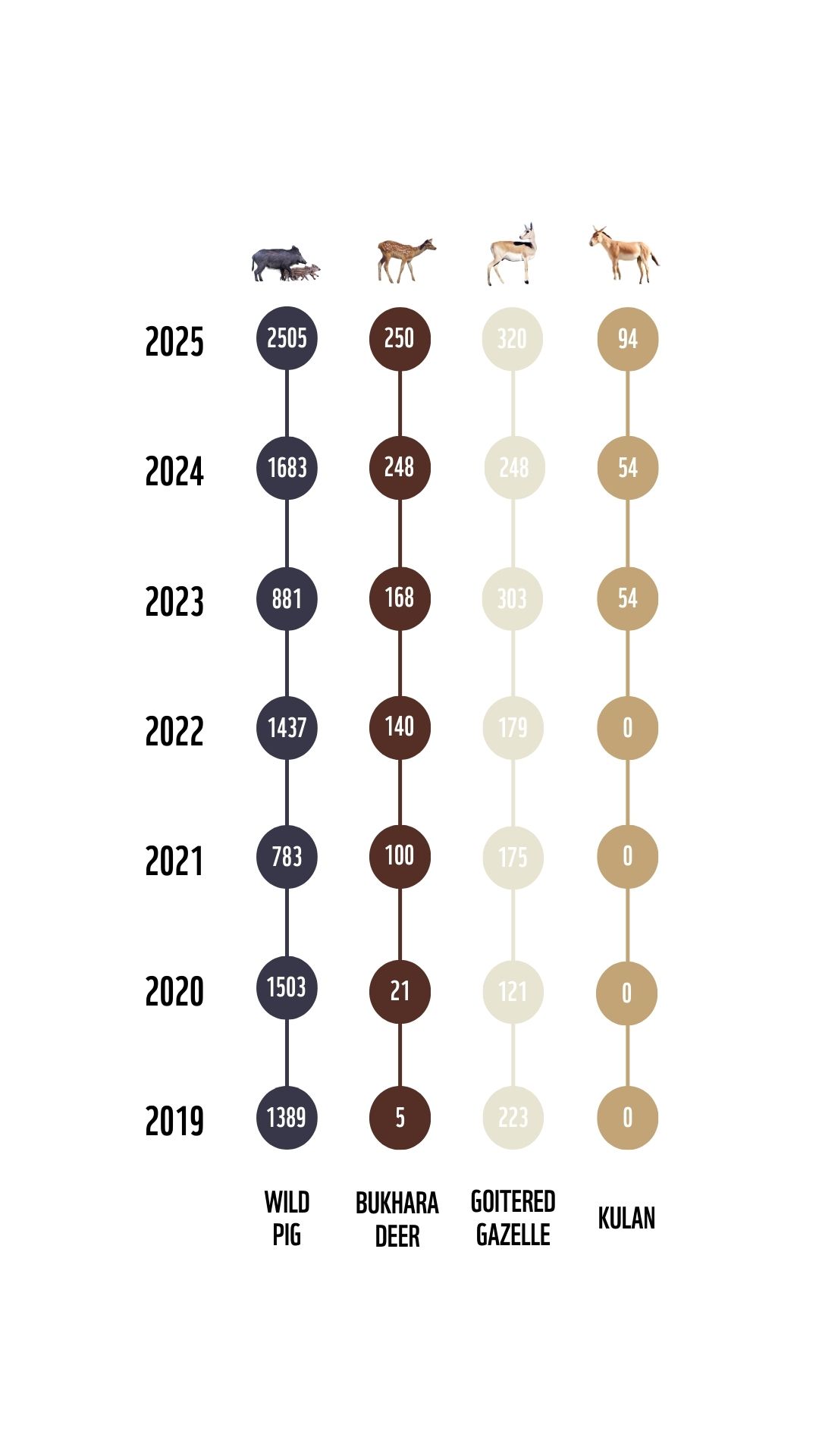
Here's the population of ungulates in Ile-Balkhash Nature Reserve from 2019-2025. Populations of tiger prey are recovering thanks to a combination of reintroductions, habitat restoration and supplementary feeding.
In 2020, an additional 16 Bukhara deer were released to join the initial five while a further ~50 individuals were translocated to a pre-release site in the area.
In 2021, the creation of eight watering holes contributed to an increase in gazelle abundance.
The wild pig population naturally fluctuates over the years but shows an overall positive trend.
In 2023, 54 Kulan were reintroduced to Ile-Balkhash after being absent from Kazakhstan the ecosystem since the 1930's.
Over the years, the composition of herbivores shifts with larger species such as deer and kulan increasing relative to smaller-bodied wild pig and gazelle. Primarily due to reintroduction efforts the total biomass of larger species has risen from roughly 1% in 2019 to about 30% in 2025.
Because larger prey are critical for supporting tiger reproduction, this change is ecologically significant.
In 2025, there was the first successful breeding in the Kulan population and an additional 19 individuals were reintroduced to diversify the genetic pool.
LOOKING FORWARD
2026 will be a transformative year for tiger conservation, with ambitious projects and innovative approaches driving progress across Asia. At the forefront is the Kazakhstan tiger reintroduction, which will see wild tigers return to the Ile-Balkhash Nature Reserve in the coming years, maybe as soon as 2026.
In Thailand, feasibility studies for the Phou Khieu wild-to-wild translocation will conclude, marking a major step towards expanding tiger range in Southeast Asia. This includes community engagement, prey assessments and readiness evaluations, alongside a Global Tiger Innovation Facility-backed project developing sustainable financing models in partnership with Conservation Capital.
These bold initiatives give hope to the idea that, under the right conditions tigers can return to where they’ve been lost.






 Built with Shorthand